
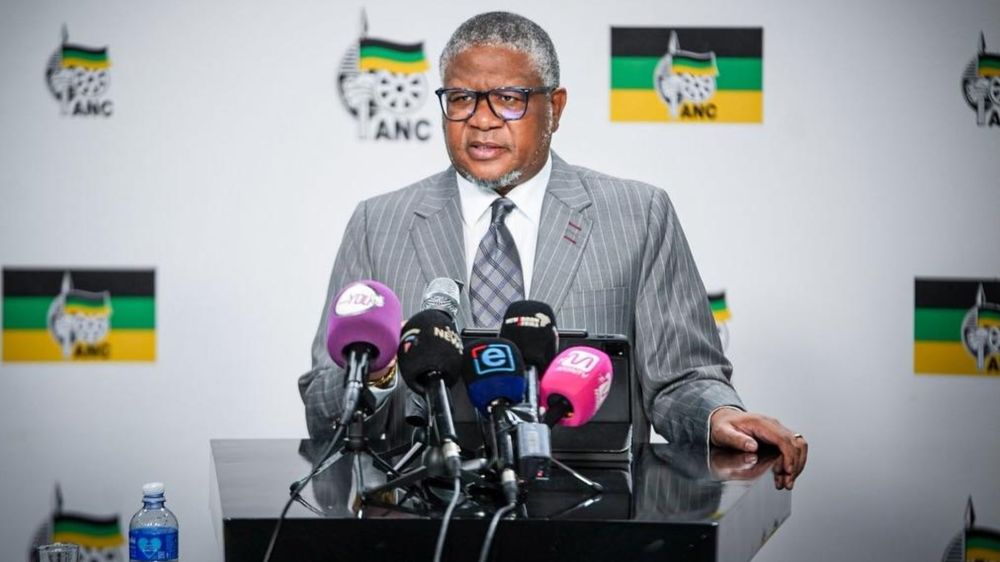
The Secretary General of the ANC, Mr Fikile Mbalula, says that they are playing with the wishes of the parties who think they can remove President Cyril Ramaphosa from office.
Mbalula said that the proposal to remove Ramaphosa will never succeed unless it is supported by the ANC.
He said this while speaking to the media before the meeting of the executive committee in the ANC which was called to deliberate on the decision of the Constitutional Court.
Yesterday’s court decision forced Parliament to begin the process of removing Ramaphosa from office.
Mbalula said it will not be easy to remove Ramaphosa from office as the motion to remove the President needs to be voted for by 66.6% of the members of Parliament.
The ANC has 40% of the members of Parliament which means that the request to remove Ramaphosa will not succeed if all the members of the ANC oppose it.
“We hear people talking, saying that Ramaphosa will be removed from office. It is not as easy as they think. The request to remove the President will not be successful if we oppose it.”
Mbalula said they will discuss with the parties they are in charge of in the coalition government.
“Since we are governing jointly, we always talk with the groups we are partnering with. It will not be the first time that we talk to them. Even when there was talk about the increase in the tax added to the things we buy, we talked with the groups we are partnering with.”
Parliament has announced that the committee that will carry out the process to remove Ramaphosa from office will have 31 members from 16 parties represented in Parliament.
The ANC will have nine members, the DA will have five members, the MKP will have three members and the EFF will have two members.
Other groups will be represented by one member per group.
The Speaker of the Parliament, Mr. Moloto Mothapo, said that the political parties have been given a deadline of today to submit the names of the people who will represent them in the committee.
“When the Speaker decided how many people would represent the parties, he did not only look at how many seats the party has in Parliament but also looked at the importance of all parties being represented. That is why we did not follow the standard system when it was decided how the parties would be represented. Minor parties would not be represented if the standard system was used.”