





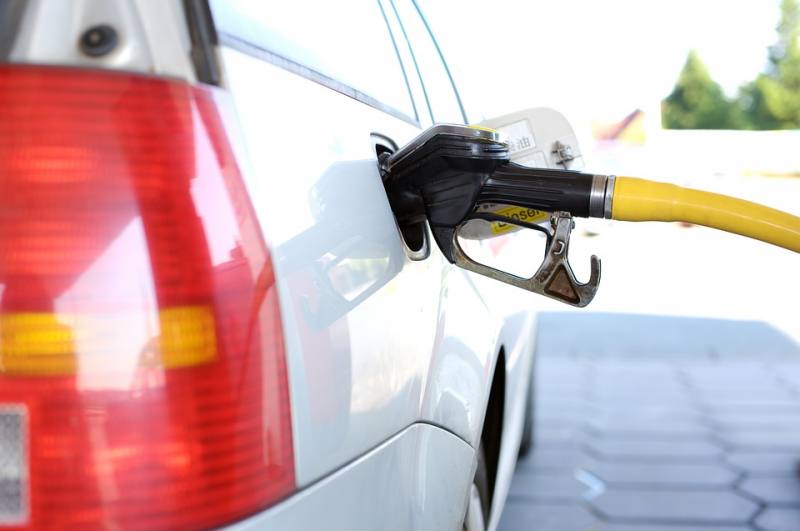
Archive photo: Pixabay
Experts believe that consumers should prepare themselves for a protracted period of increased fuel prices that could possibly last another nine to 12 months.
This warning comes amid growing concerns about global stability and its impact on the local economy.
Thys van Zyl, the CEO of Everest Advisory Services, says the current market conditions do not bode well for South Africans’ wallets.
“The current inflation data does not yet give a complete picture of the situation. The influence of rising international oil prices, especially in light of the conflict in the Middle East, will only become clearer in the coming months,” warns Van Zyl.
According to analysts, the pressure on fuel prices is not a short-term phenomenon. With estimates indicating that the high costs may continue for as long as a year, consumers and businesses are advised to tighten their belts.
“For as long as oil prices remain high and global tensions continue, consumers must prepare themselves for a longer period of increased fuel prices. This environment also puts the Reserve Bank in a difficult position. Inflationary pressure may mean that interest rate cuts are delayed or even that interest rates start to rise again,” says Van Zyl.
Levy relief: The next hurdle
The situation is further complicated by the planned end of the fuel levy relief from July. These measures by the government have so far served as an important buffer, but their end is in sight.
“These measures have made a significant difference so far. Without the intervention, fuel prices would have been significantly higher. Without this relief, petrol prices could have risen by R5 to R6 per litre, and diesel even between R10 to R14 per litre.
“However, if this relief is withdrawn while global prices remain high, further increases cannot be ruled out.”
Administrative errors exacerbate uncertainty
Although the long-term outlook is the biggest source of concern, recent administrative errors by the Department of Mineral and Petroleum Resources have not helped to calm the mood.
The department had to revise its initial diesel increase for May from R6.19 per liter to R5.27 due to a calculation error.
“The error arose because only 0.93 cents instead of 93 cents (R0.93) of the fuel levy relief was applied. Although the error was rectified relatively quickly, such contradictory announcements contribute to greater uncertainty.
“In an environment where fuel prices are already strongly influenced by global factors, this makes planning more difficult and undermines confidence in short-term forecasts,” says Van Zyl.
Ripple effect on cost of living
The fact that more than 70% of goods in South Africa are transported by road means that higher diesel prices seep directly into the cost of basic foodstuffs. This places a heavy burden on households that are already struggling with a sluggish economic growth rate of only 1%.
Van Zyl emphasizes that financial discipline is now more important than ever.
“Consumers and businesses will have to adapt to an environment of higher input costs. This requires discipline, forward planning and realistic expectations about the road ahead.
“Even with government intervention, we are already seeing significant pressure on households and businesses.”