




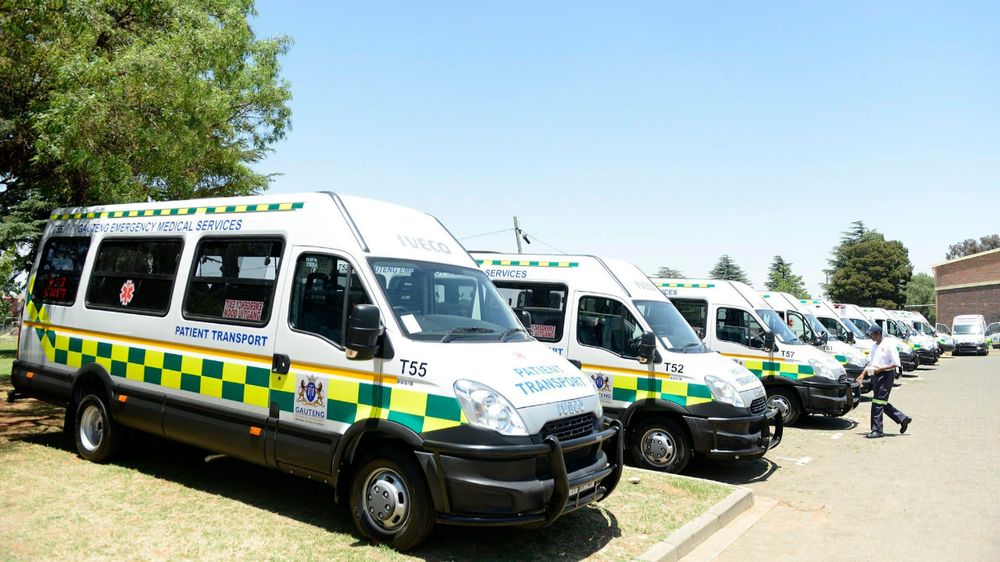
THERE are more than 200 emergency vehicles belonging to the KwaZulu-Natal Department of Health that have been parked in garages because they are not in working condition and are awaiting repairs.
This news came from a report presented by the Committee of the Department of Health in the province, which revealed that these ambulances are half of the number of ambulances in the Department.
This is like adding pepper to the wound of the KZN Health Department’s problems, especially because there were already complaints that ambulances do not arrive quickly when they are called to save people’s lives, in some cases they did not arrive.
After the complaints of the committee members of the Department in the recent meetings, the Department exposed the nature of these challenges, and pointed out that many of the delays are caused by the fact that ambulances and other vehicles are not repaired.
The Ministry revealed that it has a contract to work with a company hired by the National Treasury, which helps them to ensure that their vehicles are in good condition in the country, and if the vehicle has a problem – it is their job to fix it.
However, the Ministry has complained that the repair of these vehicles takes a very long time, so that it happens that they are not repaired for a month, which means that there is a shortage of vehicles that do the main work.
The report of the committee revealed that there are 449 ambulances, and 225 are not in a suitable condition to work. The emergency department has 484 vehicles, 205 of which are under repair.
It has also been revealed that one of the problems that lead to delays in these programs is the slowness of the program to identify problems in the car, some of which usually take 14 days to more than a month.
In other cases, it is possible that these car repairers end up checking part of the damage on the cars, but do not rush to repair them. In some cases, they are returned and said to have been repaired, and then it turns out that they were not completely repaired.
“Since these vehicles began to be repaired by the people who currently repair them, it has become common for the Department’s vehicles to be taken to mechanics who do not have the full knowledge to repair the damage that is there, which sometimes causes it to be more damaged than the actual condition. There are vehicles that when they come back for repair, some parts of them are damaged which were not a problem before,” said the report.
The report also complained that repairing these cars is very expensive and unsatisfactory, as it sometimes happens that repairing something that should cost R2 500, but ends up being paid for R3 500 or more.