





IMOTO: VOLVO ES90
VOLVO Car South Africa is one of the first companies to bring electric vehicles to South Africa.
We have seen it start selling the XC40 Recharge, EX30 and last year it brought the flagship EX90 which was in contention for the title of 2026 South African Car of the Year.
It has become history that the title was taken by the Jetour T2 which was the first time that a Chinese car won.
Volvo, although it originates from Sweden, but has a relationship with China as its owners are the Geely company from that country.
But we are not there.
They continued their introduction of electric vehicles with the ES90 which is their first new-energy vehicle (NEV) sedan.
When you walk by it, people turn around because it catches their eye. It doesn’t matter how old you are because I passed by another higher education institution and heard the sounds of them turning around.
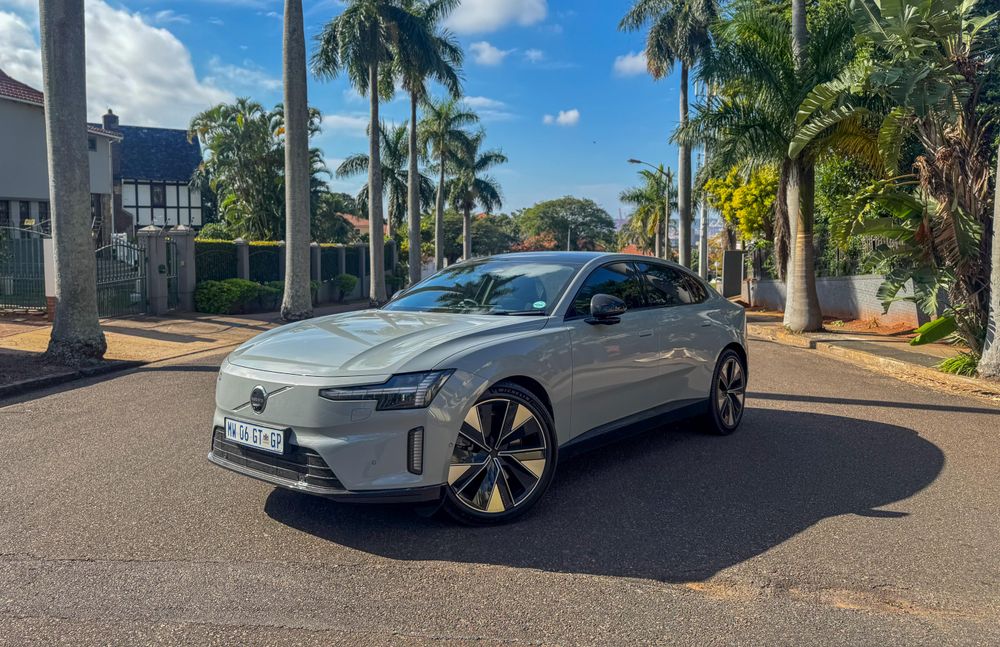
The one we were going with was the flagship of the family, the Ultra as it comes in three variants. It was gray in color. The front is closed to the grill since there is no radiator that needs to be blown.
The lights are LED. The rims are 21 inches and at the back there are LED lights, some of the stylists put them on the sides of the windscreen.
These front and rear lights come on when you unlock or lock it.
Opening it is done by approaching it with a “key” that looks like a toy. Even if you turn it off, it’s too far away and it locks itself.
This key is a problem because inside it has a place to charge without a cable, which is where you must definitely put it to charge because you have a problem. There were times when it wouldn’t open because I didn’t charge it, sometimes I left it and called a toll car because I was in a hurry.
Our colleagues who installed the app on their mobile phone did not feel this because you just use it as a key.
Going by the way it looks, I won’t blame those who say it’s not a sedan but a fastback because of its layout.
The skulls have a glass that when you click on the touch screen the “button” changes so you can see the sky. It was good because the sun isn’t too hot anymore, but when it shines, it warms you up, which I don’t like.
Inside I was surprised by how big it is as it has a wheelbase of 3 102mm. This makes it more than one of its competitors BMW i5 which has 2 995mm.
Boot space is slightly smaller than the i5 at 446 liters compared to the rival’s 490l.
Rear passengers have plenty of space and the seats can be folded down a little. The problem is that the knees are high and end up going up and down as if you are squatting.
You can heat or cool the seats. It’s the same thing as the comfort front.
The front is similar to modern Volvos in that they don’t have buttons but you do everything on a large touchscreen infotainment system.
This is where you open the boot, adjust the mirrors, adjust the steering wheel, play music through the Bowers & Wilkins speakers, connect the mobile phone – Apple CarPlay/Android Auto, see the status of the car and more.
The ES90 is also fun to drive on the road.
It has a 92 kWh battery that if you charge it full you can travel 755 km.
It has never been even close to this because somewhere I have traveled 177 kilometers and it has shown that it can go another 330. At that time it was consuming 18kWh/100km.
If you charge it in a fast DC charger as it can install with a power of 350kW, they say it goes from 10 to 80% in 25 minutes.
You can also charge it with a 22kW AC or at home.
Its power is 245kW and torque 480Nm and it sends it to the rear wheels.
What makes it fun is the air suspension that helps you feel the bumps. It’s pleasantly quiet inside and grippy in corners.
Volvo is known for safety and with the ES90 they have included a number of driver aids to help you stay in the lane, tell if there is a side car and so on.
This is very helpful because the rear view mirror is difficult to see due to the small size of the window.
Price:
ES90 Ultra – R1 795 000
It comes with a warranty and maintenance plan for five years or 100 000km, a home wallbox charger and a charging card in public areas for three years with an annual fee of R6 000.