






Argieffoto (Foto: South African Tourism / Flickr via Wikimedia Commons)
The Ekurhuleni Metro Council inflated its application for power tariffs for 2024/2025 by at least R13 billion by manipulating supporting information used in the application, say a group of industrialists.
According to this group, the energy regulator, Nersa, apparently just let it slip through, without checking the figures.
Even though this is Ekurhuleni’s third attempt to try to establish a legal rate for a period that has long passed, the application currently submitted to Nersa for a decision is so full of errors that Nersa will have to reject it once again, the Casting, Forging and Machining Cluster of South Africa (CFMC) argued on Monday.
These errors are also underlying Ekurhuleni’s tariff application for 2026/2027 which has already been approved by Nersa and will come into force on 1 July, the group says. They therefore also question the legality of this tariff.
Moreover, they suspect that other municipalities’ rate calculations do not look much better.
Steve Jardine, the managing director of the Cluster, and their lawyer, MC Botha, an executive consultant from the law firm TRM Tax Attorneys, disagreed during a public hearing before the energy regulator Ekurhuleni’s tariff application.
This is the latest chapter in a saga that testifies to ineptitude on the part of the metro board and the regulator.
The group of industrialists initially went to court to have the tariffs approved by Nersa for Ekurhuleni for 2024/2025 set aside. In January this year, the Pretoria High Court declared Nersa’s approval illegal and set it aside. The rates of Johannesburg, Madibeng and Msunduzi for that year were also set aside in the same ruling.
It was again referred to Nersa to fix their brewing.


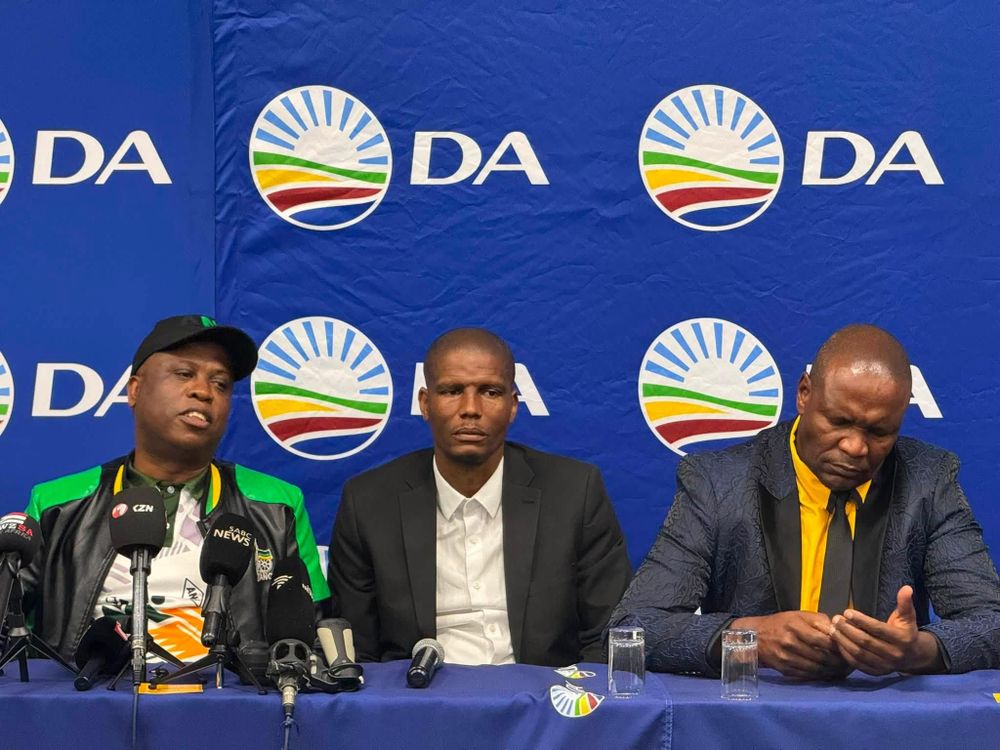
Khathutshelo Rasilingwane, the DA’s mayoral candidate in Ekurhuleni. (Photo: Provided)
Ekurhuleni, like the other three municipalities, had to prepare applications in advance and submit them to the regulator.
This was done, but Nersa rejected the new Ekurhuleni application after the industrialists pointed out, among other things, an error of R7 billion. Madibeng’s application followed the same path.
The two municipalities submitted applications again and this led to the public hearing on Monday 15 June where Jardine and Botha aired their opinion.
They apparently identified, among other things, additional errors of R6.6 billion in Ekurhuleni’s application. If Nersa had approved the applications without correcting the errors, the power tariffs in Ekurhuleni would have had to be increased unnecessarily in order to recover the R13 billion from these two errors from consumers, says Botha.
He explains that the metro board bases its calculations for 2024/2025 on a cost study in which the tariff income of industrial consumers and other consumers whose tariff is linked to the time slot in which they use the power is completely underestimated. The result is that the rate hike that appears to be necessary to beat the books is artificially inflated.
According to their calculations, the increase of 19.1%, which the council is asking for this group of users, should actually be only 8.6%. In one specific subsection of the rates, according to the Cluster, there should actually be a reduction of almost 14%.
The exact opposite is done for households. One specific household rate that the council wants to reduce by 13.3%, according to Botha, should be increased by 52.1% to reflect the actual cost.
During the hearing, Nersa’s regulator members sounded overwhelmed by the errors which, according to the Cluster, make it impossible for them to determine a legal tariff.
They indicated that they do not see the detailed figures in such an application – that is the administration’s job.
They proposed a meeting between Botha, Jardine, Nersa and representatives of Ekurhuleni.
“I’m not sure what they want to achieve with that,” says Botha.
When the court set aside the tariff in January, provision was made in the order for a “default position”. This means that, if Nersa has not yet set a new rate for 2024/2025 by 30 June, the previous year’s rates will apply. However, this only applies to the parties in the court case.
So the fact that the rates were illegal for that year makes no difference to what consumers paid then, and there will be no corrections.
As regards Ekurhuleni’s tariffs for 2026/2027, Nersa, now that he has been pointed out the faulty calculations, should go to court himself to have his own decision set aside, so that a legal tariff can be set, says Botha. The regulator may not reverse its own decision.
According to Botha, the latest tariff application from Madibeng is “an even bigger mess”. According to him, there is no information to determine the true cost of power delivery and according to law this is the only basis on which a legal tariff may be calculated.
Deon Conradie, who has specialist knowledge in setting power tariffs, says – without detracting from the municipalities that do do a good job – that he has no doubt that many other municipalities’ tariff applications are just as full of errors.


Ekurhuleni archive photo (Photo: ActionSA)
He says that thanks to litigation by business people in Nelson Mandela Bay and Afriforum, the manner in which Nersa must set power tariffs has been clearly spelled out and the information on which it is based has been published for the first time this year so that the public can study it.
He says these are complex documents, but he advises communities to be serious about them, so they can ensure that their rates are not unnecessarily inflated.
Conradie says that Nersa should actually work through the figures themselves and ensure their quality before they are published for public comment, but apparently they are not doing this.
Furthermore, the responsibility for correct decisions rests with the regulator itself and cannot simply be shifted to officials. If the administration is letting the regulator members down, they should deal with the shortcomings there, he says. He believes that Nersa does not have sufficient resources to thoroughly check the quality of tariff applications.