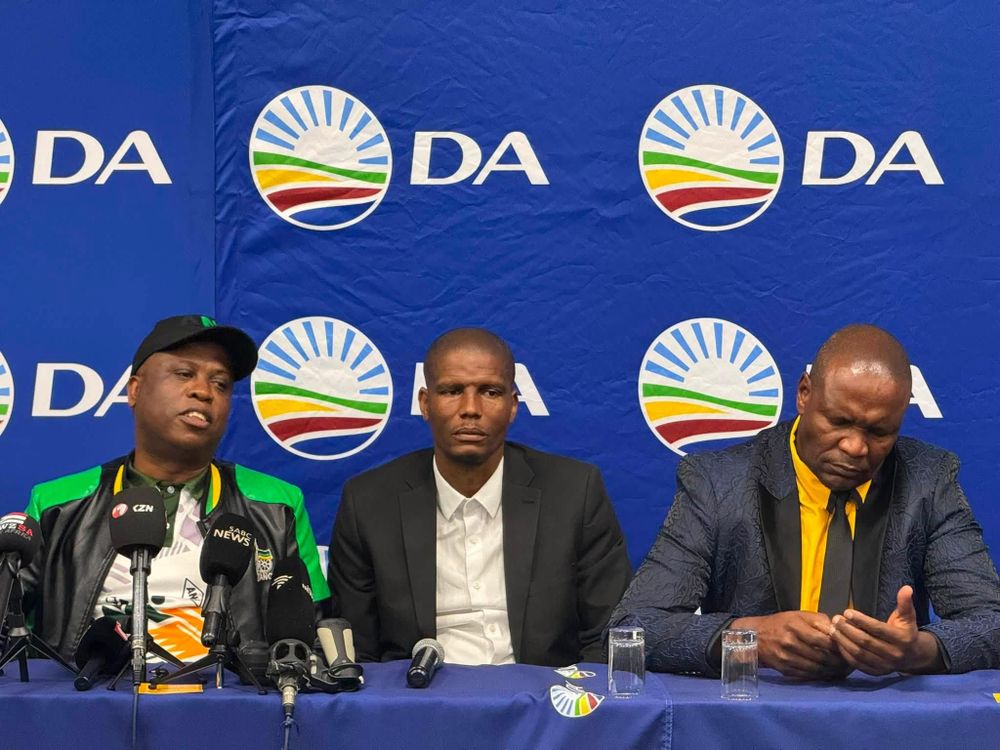







ActionSA gives an overview of the government of national unity on Thursday. (Photo: Michael Beaumont/X)
South Africans got a “government of national underperformance” (GNO), rather than a government of national unity (GNE). This according to ActionSA who, in the spirit of the RNE’s first two years since its establishment, gave a comprehensive overview of the RNE.
It is based on ActionSA’s own performance framework, the so-called GNU Performance Tracker.
The party admits in the review that there have been isolated improvements over the past two years.
“But isolated improvements are not enough,” Athol Trollip, ActionSA’s parliamentary leader, said on Thursday when launching the report.
“South Africans see outcomes. But the outcomes after two years are simply not good enough.
“Two years after the RNE, South Africans were entitled to urgency, accountability and results. Instead, they received a larger cabinet, higher unemployment, failed infrastructure and continued uncertainty.”
Economic growth
ActionSA says that if there is one criterion by which South Africa’s government must ultimately be judged, it is whether job opportunities are created.
And using that metric, the RNE fails miserably.
Trollip says that the widespread unemployment rate increased from 42.6% two years ago to a historic 43.7% under the RNE’s rule.
“The reality is that South Africa needs sustained growth of at least 3% to 4% per year to significantly reduce unemployment. But instead, growth stood at only 0.6% in 2024. Only 1.1% last year. And only 0.5% in the first quarter of this year.
“These are not growth figures. These are stagnation figures,” says Trollip.
“And stagnation means unemployment. Unemployment means poverty. And poverty means hopelessness.
“For that reason, ActionSA’s assessment remains unchanged. Economic growth that creates opportunities is given an F symbol.”


Athol Trollip (Photo: Athol Trollip/Facebook)
Leadership
For ethical leadership and public service, ActionSA also gives the RNE a rotten F.
Trollip says that over the past two years, the RNE has had a “suspended police minister, a minister of higher education who lied to parliament, a minister of social development who hid sponsored SUVs from parliament, an agriculture minister whose gross mismanagement of the foot-and-mouth disease outbreak destroyed the livelihoods of farmers and farm workers and a policy on artificial intelligence (AI) that hallucinates about the very AI it is said to attack”. produced.
ActionSA believes that weak leadership has become a defining characteristic of the seventh administration.
“Whether it’s scandals, incompetence, policy shifts or a refusal to hold underperforming ministers accountable, the RNE has consistently failed the test of ethical leadership.”
Oversized cabinet
Trollip of course also pointed out that after the establishment of the RNE, the cabinet grew from 30 ministers and 36 deputy ministers to 32 ministers and an “amazing” 43 deputy ministers.
“South Africa now has one of the largest and most expensive executive structures in the world.”
According to the GNU Performance Tracker, taxpayers now spend approximately R600 million annually on the salaries of ministers, deputy ministers and their support staff. A further R350 million is spent on travel and accommodation, while R4.5 billion is spent on VIP protection services.
“When all the benefits, protection and support structures are included, this bloated executive costs taxpayers R6 billion annually,” says Trollip.


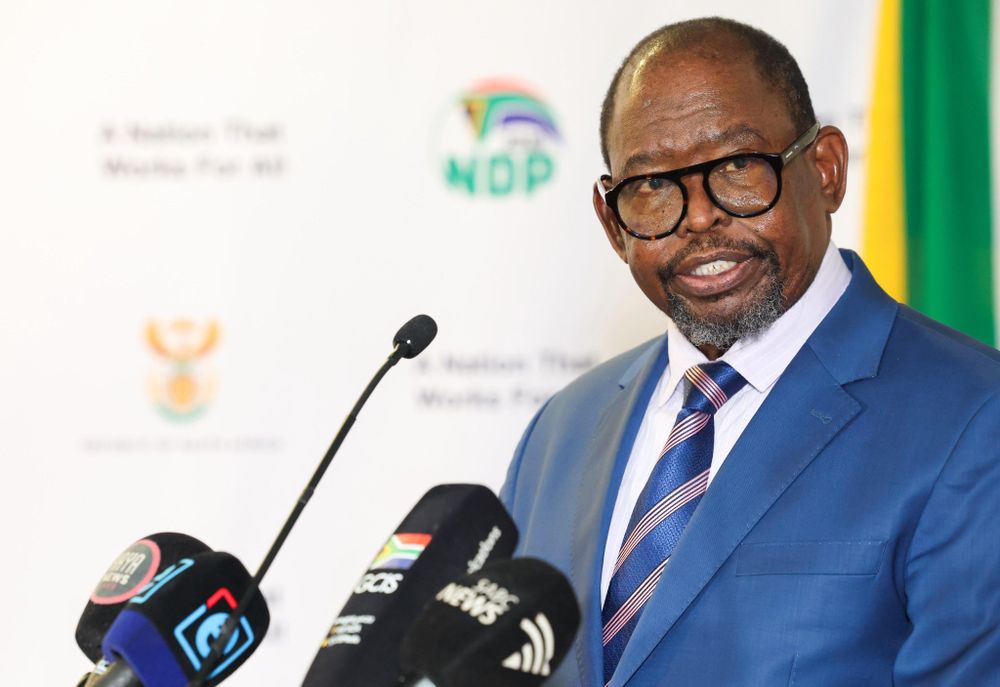
The respective leaders of the government of national unity, (Photo: SA Government/X)
Infrastructure for trade and transport
Economic growth cannot occur without functional infrastructure. However, ActionSA believes that South Africa’s ports remain a “national embarrassment”.
South Africa should be competing with the world’s best ports, but now the country is competing to avoid being placed last.
“Cape Town and Durban consistently rank among the worst container ports in the world. Freight transport tells a similar story,” says Trollip.
“The minister has committed to significantly increasing the annual cargo volumes by 2029. Yet the current performance remains far below what is needed to achieve that target.
“And while we welcome the opening of our railways to private sector involvement, it remains to be seen whether this government can implement its plan effectively.
“Where there has been progress, we acknowledge it,” says Trollip.
For example, Eskom’s energy availability factor has improved over the past two years and South Africans have been free from load shedding for more than a year.
“Because there has been measurable, albeit insufficient, progress in energy and logistics, ActionSA keeps this category at D.”


The respective leaders of the government of national unity. (Photo: GCIS/X)
Law and order
For this category, ActionSA gives the RNE a disappointing E.
“South Africa remains one of the most violent countries in the world. Although the murder rate has fallen, 58 people are still killed every day,” said Trollip.
“Gender-based violence remains a national crisis. Every day, women and children still live in fear of becoming the next victim.
“Recent revelations by the Madlanga Commission and Parliament’s ad hoc committee have exposed something even more alarming: crime syndicates that have infiltrated the highest elements of our law enforcement institutions.
“When organized crime can infiltrate those responsible for fighting crime, public trust collapses.
“South Africans deserve better. They deserve a police service that protects communities rather than being compromised by crime networks. They deserve a justice system that punishes criminals rather than empowering them.
“For that reason, law and order remain on an E-symbol.”