

The Beitbrug border wire. (Photo: Phill Magakoe/AFP)
Deur Tania Broughton, GroundUp
The Constitutional Court refused to hear appeals by two construction companies against a special tribunal ruling that they must pay back all profits they made from the Beit Bridge border fence project.
The country’s highest court said the appeals by Profteam CC and Caledon River Properties (trading as Magwa Construction) did not affect the court’s jurisdiction. The verdict finally brings an end to a protracted court process.
The R40 million contract was awarded for the construction of a 40 km long razor wire fence on the border between South Africa and Zimbabwe. The Department of Public Works and Infrastructure awarded it to the two companies in March 2020, during the covid period, without a competitive tender process.
The contractors also received advance payments of around R21.8 million.
After completion, the fence began to collapse and the illegal crossing of the border it was supposed to prevent continued.
Maroela Media earlier reported that the project, to repair and replace a 40 km long border wire at the Beit Bridge border post, ended up costing R40.4 million, just over R1 million per kilometer. This while it should have only amounted to around R26 million.
As part of its investigation into procurement during the covid pandemic, the Special Investigation Unit (SUE) investigated the project. The SOE found the contracts invalid due to procurement irregularities and, in addition, substandard building materials were used.
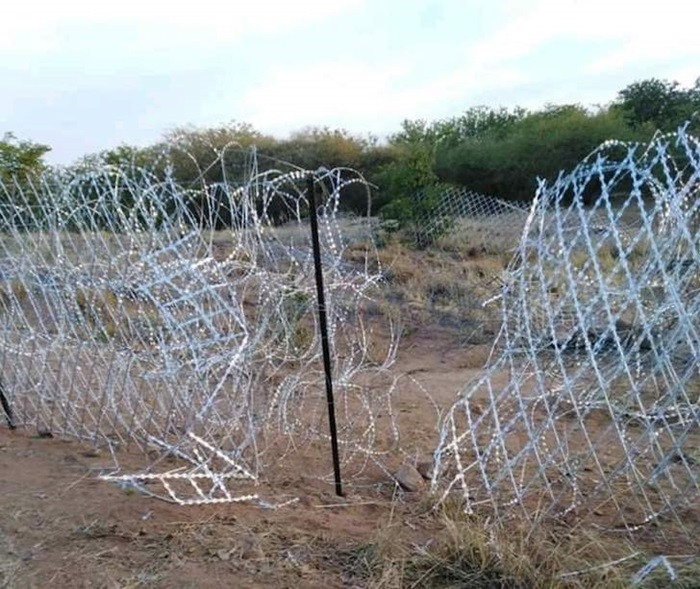
(Archive photo)
In March 2022, the special tribunal declared the contracts invalid and ordered that the contractors be stripped of any profits they made from them. Judge Lebogang Modiba of the tribunal said the state and the public had been deprived of the public, social and economic benefits that would flow from a firm border at Beit Bridge.
The following year, the High Court dismissed the contractors’ initial appeal and upheld the tribunal’s order requiring the contractors to provide audited statements to determine the amount of their profits.
In 2024, the Court of Appeal refused leave to appeal and in January this year also dismissed a reconsideration application.
In a statement, the SOE said the Constitutional Court’s ruling “closed the door to further appeals” and confirmed the findings of the special tribunal.
“The SOE welcomes this decision. The rulings (of the tribunal and the courts) reinforce the principle that no party may benefit from irregular and unlawful procurement,” said the SOE.
The unit said it would refer any evidence of criminality to the National Prosecuting Authority for further action and would, if necessary, take civil action to recover the state’s financial losses.
- This reported was originally posted by GroundUp and is used with permission.