
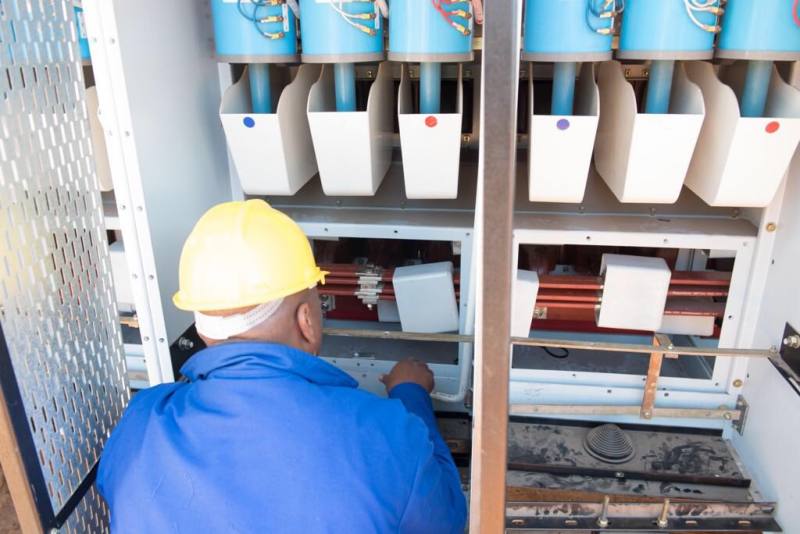
(Photo: Metro)
The Tshwane metro may be on the brink of a large-scale technical collapse while a critical shortage of qualified tradespeople is crippling the city’s power grid. While the metro’s official reports try to paint a picture of brisk service, some say the figures actually show that only a handful of technicians keep the lights on in the capital.
Nick Pascoe, a FF Plus councilor in the Tshwane metro council, says the latest figures point to a disturbing reality that is not in line with the metro’s public image. He says the customer relationship management report (CRM) aims to create a more rosy picture.
“While the metro’s CRM report for the second quarter tries to create a successful image with an alleged 92% response to public inquiries, the actual figures tell a very different story.
“The 92% ‘response’ does not mean that problems have been solved, but simply that a call has been answered or a complaint has been registered. The purpose of the report is to measure the effectiveness of the customer service center – not necessarily to show that problems have been solved.”
He says the real crisis lies in completing tasks.

Technicians at the Kloofsig substation. (Photo: City of Tshwane/Facebook)
“The Department of Energy and Electricity’s completion rate for power faults has fallen to only 37%. A case is considered completed as soon as the service can be delivered again, not simply when the technician arrives on the scene.
“There are currently more than 12,000 technical requests that are already outstanding for more than 90 days.”
According to Pascoe, the core of the problem is a crippling lack of expertise. The metro has 55 substations of 132 kV each, but has only 26 qualified technicians authorized to work on the high voltage network.
“This means less than one qualified officer for every two substations. This shortage makes it physically impossible to repair faults in time and leaves residents without power for days.”
According to Pascoe, the shortage is, among other things, related to the unrest among workers in 2023.
“During the uprisings in 2023, many of the electrical staff tried to force the city to a standstill. The result was that a significant number of qualified high voltage tradesmen were terminated.”
He is highly critical of the city’s refusal to prioritize new hires.
“I specifically asked the mayor to present a plan on how the shortage of technicians would be bridged and what an employment program would look like. Her answer was that they were not considering it in the short term.
“In my opinion, this is political incompetence.”
Metro acknowledges shortage
Samkelo Mgobozi, spokesperson for the Tshwane mayor, admits there are capacity problems, but emphasizes that the city is working on them.
According to him, the “electricity stabilization plan” is currently being implemented to restore control over the network.

The Wapadrand Substation (Photo provided by Tshwane Metro)
“The city realizes the current technical capacity constraints. This has evolved over time due to redundancies, retirements and increasing competition for specialist skills, combined with the expansion and complexity of the network.
“Strengthening this capacity is now a priority to ensure that critical infrastructure is properly managed and maintained,” says Mgobozi.
He strongly denies that safety is being compromised due to the staff shortage.
“High voltage work is strictly undertaken by qualified and authorized personnel, in full compliance with regulatory and occupational health and safety requirements. The protection of personnel and infrastructure remains non-negotiable.”
Finances, priorities
A major source of tension is the use of available money. While the metro spends millions of rand on projects such as the Wildebeest feeder project, Pascoe argues that maintenance is being neglected and money is being spent inefficiently.

The technical team of City Power working on repairs to the Eikenhof substation. (Photo: Provided by City Power)
“The city receives billions of rand in allocations and allowances which are used indiscriminately or in many cases not at all. With such a shortage of manpower, maintenance and preventive repairs are not carried out.
“The norm of 8% of the budget for this is only a dream in Tshwane. The amount of money that is stolen, as was raised again in the Mahlanga Commission, is paralyzing the city,” says Pascoe.
However, Mgobozi defends the city’s budget and says the metro must find a balance between new projects and maintenance. He says that this approach includes that external expertise is only used where it is most effective, especially for specialized capital projects.
“However, ongoing operational functions such as 24/7 fault response are more efficiently sustained by in-house capacity. A permanent contractor standby model is significantly more expensive and less sustainable.”
Way forward
With the local elections taking place on 4 November, the FF Plus plans to increase the pressure. Pascoe says that because motions in the council are often summarily rejected, the party is now focusing on other channels.
“We approached the media to hang this state of affairs on the big bell. This is how the government’s incompetence is exposed and momentum is created in the run-up to the local elections.”
He further emphasized that the FF Plus is also following up on the issue in oversight committees.
“In the oversight committees, we conduct a careful review, and this situation gives rise to intensified oversight points,” he says. “We also request our members of the provincial legislature to put these matters on the agenda.”
Without urgent and practical action, Tshwane’s power grid will continue to collapse, warns Pascoe.
“The FF Plus insists that the metro immediately hires external experts from the private sector to fill this self-created deficit.”
For the residents of Tshwane, who according to the metro’s own standards must be helped within four hours (for single houses) or 24 hours (for major interruptions), the reality remains that there are thousands of outstanding requests. And a network on its knees.