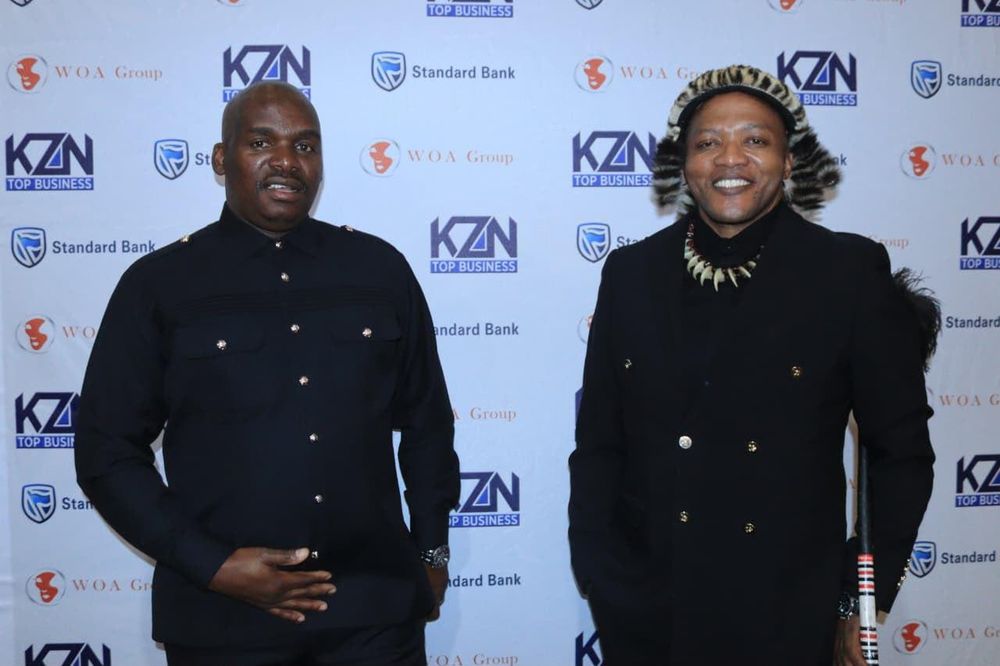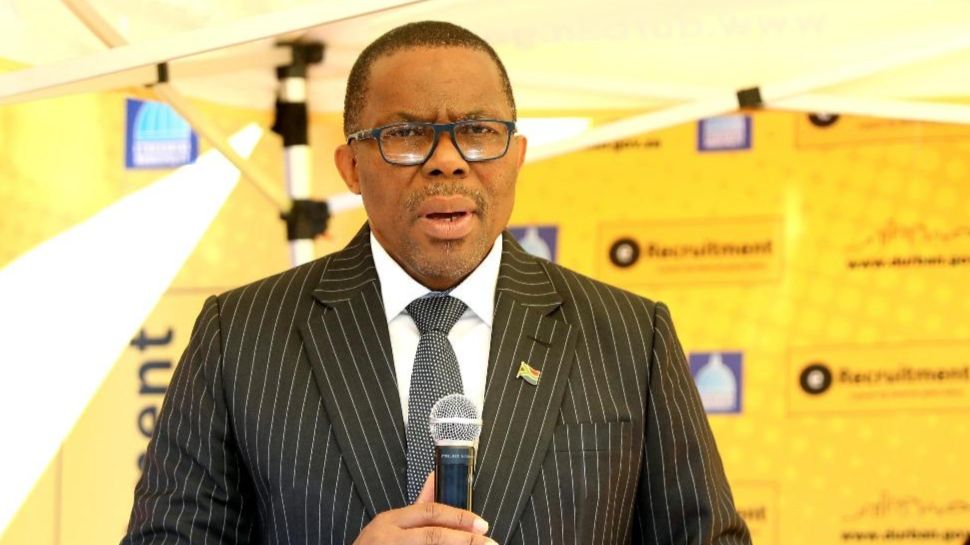






Mzamo Buthelezi, Minister of Public Service and Administration. (Photo: X/CPSI South Africa)
A large majority of civil servants’ salaries were adjusted by 4% this month to keep up with rising living costs. However, this adjustment is higher than the projected consumer price index (CPI) of 3.4% for the 2026-27 financial year.
“The adjustment is proof of our unwavering commitment to the stability of our public service,” says Mzamo Buthelezi, the minister of public service and administration, who implemented this adjustment this month.
“This is not simply an administrative update; it is a deliberate act of support for the men and women who serve the citizens of South Africa every day,” says the minister.
Others, however, are less excited about the adjustment.
“This is not an adjustment. It is an increase,” and one that the national treasury cannot afford, believes economist Dawie Roodt.
Maroela Media approached Roodt about this adjustment on Tuesday after he argued at a conference in Hermanus in March this year that civil servants are the “real state builders” due to the high salary increases they often receive.
Also read: ‘Parasitic state’: Civil servants the real state makers
On Tuesday morning, Roodt once again pointed out that civil servants “are paid a lot compared to everyone else in the country”.
“You can just look at the state’s salary account as a percentage of GDP,” Roodt believes and according to his calculations, civil servants’ salaries currently alone account for 13% of the economy.
This while all South Africans are currently reeling under the rising cost of living.


Dawie Roodt during Biznews’ conference in Hermanus. (Photo: Tania Heyns/Maroela Media)
Those receive a cost of living adjustment
The so-called cost of living adjustment of 4% is already in force from 1 April 2026 and applies to employees on salary levels 1 to 12 who have been appointed specifically under the Public Service Act.
This also applies to those covered by occupation-specific dispensations.
However, this does not apply to senior civil servants. However, it appears that senior civil servants’ turn will yet come.
“Salary levels 13 to 16 will receive attention as soon as the level 1 to 12 process is finalised,” the minister explained last week.
The adjustment also does not apply to sectoral staff such as teachers, correctional services officers, police officers and members of the armed forces as those are appointed under the Employment of Educators Act, the South African Police Services Act, the South African Defense Act and the Correctional Services Act.
It also does not apply to the National Prosecuting Authority (NPA) as these employees are appointed under the National Prosecuting Authority Act.
Buthelezi says the adjustment of 4% gives effect to resolution 1 of 2025 of the coordinating bargaining council for the public service which established a multi-year wage framework for the public service.
“Although the national treasury projected the Consumer Price Index (CPI) for 2026-’27 at 3.4%, the collective agreement includes a “floor” and “ceiling” mechanism. Because the projected CPI was below 4%, the resolution states that the increase is considered 4%.”
“By honoring the ‘floor’ mechanism within resolution 1 of 2025, we ensure that even when inflation projections stand at 3.4%, civil servants at salary levels 1 to 12 receive a deemed adjustment that provides a significant buffer against the rising cost of living,” explained the minister.


Archive photo simply to illustrate civil servants and salaries. (Photo: PSA, Facebook)
Inflation maybe even higher than 4% – then what?
But it is not going to end here, Roodt believes.
The economist predicts that the inflation rate may be higher than the current projected 3.4% due to the ongoing conflict in Iran – even higher than the 4% according to which civil servants’ salaries have been adjusted.
“So I have a suspicion that the civil servants will kick up a terrible fuss if inflation starts to rise. I also have a suspicion – as is always the case – that the politicians will then bend their knees to the civil servants next year and that they will then get even more.
“But in a way it is good if inflation rises over the coming months,” Roodt then points out, since an inflation rate of more than 4% will ultimately mean that civil servants’ salaries are reduced.
“So this is at least one benefit of higher inflation. It lowers in real terms the salaries of overpaid civil servants.”
Regarding the affordability of the adjustments, Roodt told Maroela Media on Tuesday that the adjustments are now even more unaffordable as the economy is currently doing worse due to the ongoing conflict in Iran.
“The minister should have reconsidered these adjustments and not made any adjustments.”

Dawie Roodt during Biznews’ conference in Hermanus. (Photo: Tania Heyns/Maroela Media)