
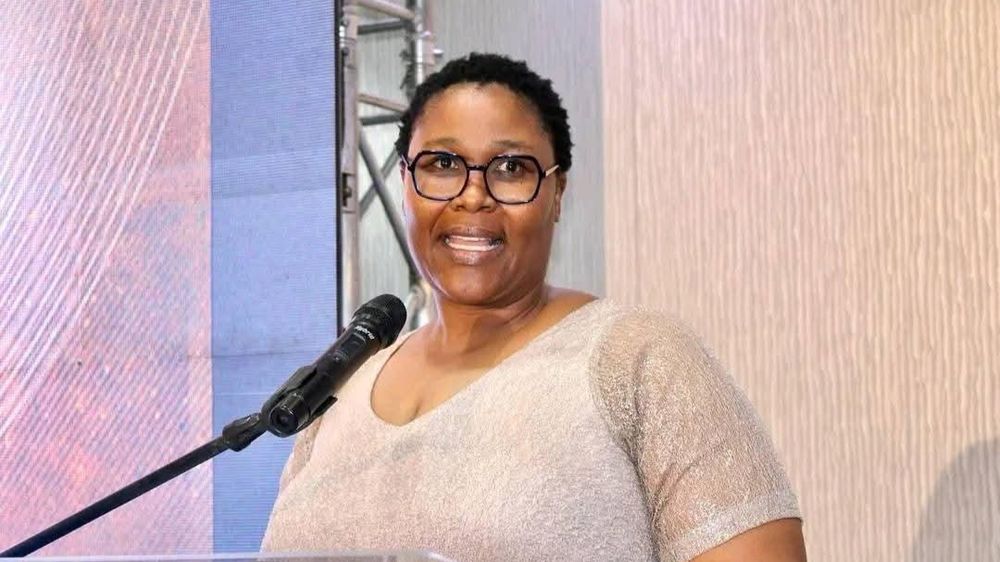
KwaZulu-Natal Women’s Rugby enters a new phase as experienced sports manager, Zilungile Ntombela, has been appointed as the first chairman of the newly established KwaZulu-Natal Women’s Rugby.
The formation of this organization under the KwaZulu-Natal Rugby Union has opened the opportunity for women’s rugby to be officially represented in the decision-making bodies of the province and is expected to strengthen the development of this game in the whole province.
In an exclusive interview with Solezwe journalist, Xolile Mpisane, Ntombela described the creation of this framework as a milestone after years without a constitutionally recognized organization focusing on women’s rugby.
Xolile Mpisane: Can you tell us about your life before you got into rugby?
They are good, Ntombela: I was born in Mount Frere, I grew up there, and in 1997 I went to study at the University of Durban Westville (known as the University of KwaZulu-Natal). Since then I settled in the province of KwaZulu-Natal. I came from Zilunge Makaula as now I belong to Ntombela.
XM: How did your love for rugby start?
ZN: At the University I started playing karate but when the women’s rugby team was started I joined it because it was a sport I grew up watching played at home. When we started playing, we were helped by a group of boys, and eventually we found a competition where we played with other women’s groups. After I left school I joined the Jaguars foreign team because I wanted to one day play for the national team.
XM: How did your dream of representing the country come true?
ZN: It was a long journey because at that time there were no coaches willing to work with us. They were afraid that we would get hurt. It was difficult to get help, but over time, people started showing up to help us practice. I played until I was selected for the first women’s national team that was put together in 2004 to face Wales.
XM: How did you get into sports management?
ZN: I injured my leg and back, which forced me to stop playing. It was difficult because at that time we didn’t have any experts to help us recover properly. That’s when I decided to help those who still know how to play. That’s how I started knocking on different departments to fight for women’s rugby to be funded, as I am still doing now.
XM: How important is the establishment of a structure that will take care of women’s rugby in the province of KwaZulu-Natal?
ZN: We cannot escape the fact that rugby is still dominated by men and it is difficult for our voices to be heard when we speak for women’s rugby. We have been trying to get into the rugby governing bodies for years and it finally got done this year. We thank the leadership of Graham MacKenzie, the president of the KZN Rugby Union, and SA Rugby for strengthening the plans for women’s rugby to be developed in the provinces.
XM: Since there is now a women’s organization that is officially part of the KZN Rugby Union, what are the big things you are looking to fix first in women’s rugby?
ZN: The things we intend to start with is to spread girls’ rugby because it will produce players who will eventually play for provincial teams. If schools do not promote girls’ rugby, we will not be able to increase the number of players at the grassroots level. We need them to start at the age of under 10 so they can grow up with rugby. That’s what the best countries in the world do in any sport. Another thing we are looking at is that there are leagues for players of different ages that will reach the top level so that there will be no time when the players do not have a league to play under.
XM: In your opinion, how long will it take for the female players in this province to play paid rugby to make a living from this game?
ZN: It is something that we are looking for to happen as soon as possible because it is clear that if our players cannot focus on playing, without working in other areas, they cannot raise the level. We see how the Pretoria team under the Bulls, the Daisies, dominates women’s rugby because they are the team that signed the players to paying contracts. We are from KwaZulu-Natal and we have to follow there and there are plans, although I cannot say now when it will happen.
XM: What are the biggest obstacles that make it difficult for women’s rugby to reach this level of pay?
ZN: The biggest problem we are facing is the lack of sponsors. It is even harder to find sponsors for our national women’s rugby league. We were hoping that the development of local teams and the good performance of the national team in the recent World Cup would attract sponsors but it has not happened as we wish. We are grateful that there are those who have started to contribute but we still need many others because our players need to be able to be supported by experts to eat the right food, exercise properly, and to be looked after by experts if they are injured, and then they can make a living by playing rugby. That’s what we’re looking for the most.