


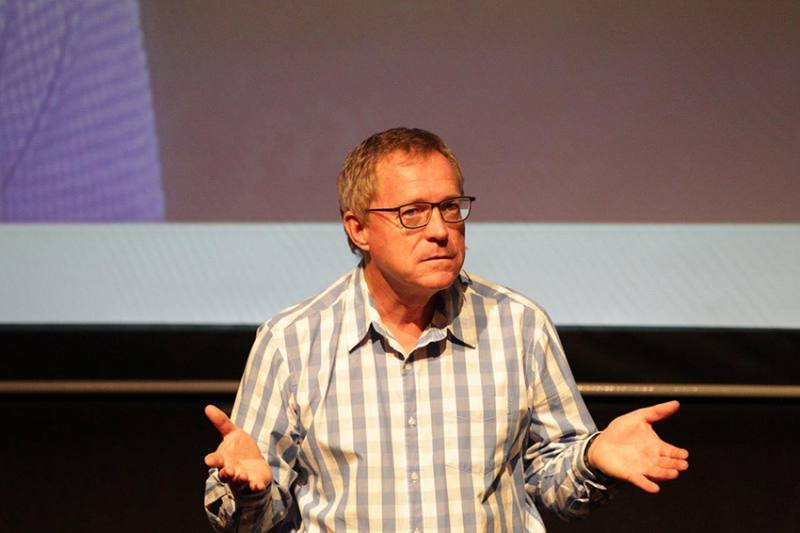
Dawie Roodt. (Archive photo: Reint Dykema)
The Association of State Servants (USA) noted with “extreme concern” comments by Dawie Roodt, well-known economist, that South Africa is a “parasitic state” with certain civil servants the real “state makers”.
Roodt was one of the speakers at the online business newspaper BizNews’ conference in Hermanus last week. He said, among other things, that the average civil servant is paid more than R50 000 per month, while there are more than 1.2 million civil servants. State-owned enterprises and entrepreneurs are excluded from this.
“The salary of civil servants represents a third of total government expenditure and as a percentage of the gross domestic product, civil servants get – and I don’t use the word ‘earn’, but the word ‘get’, because there is a difference – they get about 13% of the economy,” said Roodt.
Read here: ‘Parasitic state’: Civil servants the real state makers – Dawie Roodt


The well-known economist Dawie Roodt talks to Alec Hogg, the founder of Biznews. (Photo: Tania Heyns/Maroela Media)
He also wanted to know how it is allowed that mismanaged companies such as Eskom, Transnet and the Post Office receive increases far above the inflation limit.
Roodt said taxpayers should stop tolerating this.
“I want a political leader to stand up and say the real problem is that we have this massive state that is supposed to serve me and look after me and look after my interests, but this state has become a parasitic state.”
The US labeled Roodt’s comment as “baseless and extremely insulting” to the country’s thousands of hard-working civil servants who serve people with dedication.
“The US strongly rejects these comments. Giving a label to all civil servants and describing them as ‘parasitic’ or ‘state builders’ is a dangerous generalisation. It also indicates a lack of understanding of the realities under which civil servants work.
“This includes difficult circumstances with limited resources and enormous pressure to provide essential services. Civil servants are not the public’s enemy. They are people who serve the public. They are the nurses in hospitals, the teachers in schools, the police officers on the streets and the administrative staff who ensure that government institutions continue to function.”
The union also rejected the statement that civil servants are paid too much, saying it is not based on reality. According to the US, public service workers face the same challenges, such as rising costs of living, as any other South African.
“In the current economic climate, with rising inflation and more expensive basic necessities, it is perfectly fair for workers to expect fair and acceptable salary increases.”


(Archive photo: Mariann Szőke/pixabay)
The US says Roodt’s “general salary” of a civil servant raises questions about the source of his information.
“Policy debates must be based on facts and credible data, not on rough assumptions and populist statements.”
Salaries and increases in the public service are collectively negotiated and not determined by individuals.
“The US will not allow civil servants to be unfairly stigmatized or used as scapegoats for greater economic challenges. Civil servants form the core of service delivery in South Africa.
“They deserve respect, not baseless malicious accusations.”