





Margery Meek in Doha. (Photo: Provided)
By Kaylia Smithers
For many South Africans in the Middle East, alarms and emergency notifications accompanying airstrikes from Iran have become part of their daily life.
However, many of them have no desire to return to South Africa at this stage.
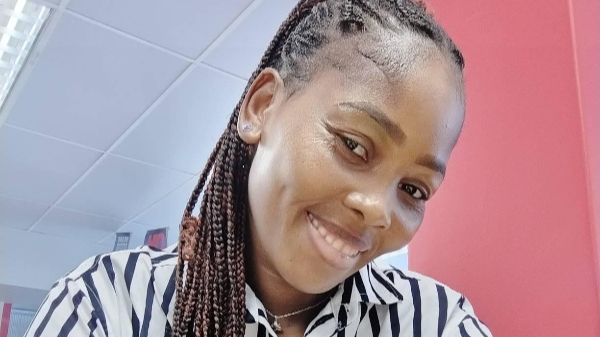
“You are restless all the time and when the notifications about another attack come through, you don’t know if you will see your family (in South Africa) again. But the government here is really making an effort to protect you and keep you safe,” says Margery Meek (64), a South African who has been working as a hairdresser in Doha, Qatar, for eight years.
In response to a military attack by the US and Israel on February 28, Iran launched a series of attacks on US military bases in its neighboring countries.
Meek describes the events when there is an air attack from Iran: “First the alarm screams on your phone as the emergency notification comes through and you have to seek shelter. Minutes later the loud bang follows as the missile is intercepted. I’m alone here in my building and can’t really go anywhere. You’re tense all the time.”
An elderly South African woman in Bahrain, who for fear of persecution asks that her name not be mentioned, saw the very first explosion unfold before her eyes. “I heard a strange buzzing sound and then saw an object moving low between the buildings before it hit the building in front of my apartment block,” she tells Maroela Media.


Emergency notification that residents receive on their mobile phones. (Photo: Provided)
She immediately packed a small suitcase with important documents, clothes and water and moved to a quieter part of Bahrain.
She says that South Africans are not getting any help from the South African embassy in Riyadh at this stage. The Department of International Relations and Cooperation (Dirco) communicated the following to South Africans in the Middle East in a statement on 3 March:
“It is important to note that South Africa’s support in these countries may be limited and that it can be assumed that no personal consular assistance will be possible in an emergency. The South African government may not be able to help you if you get into trouble, depending on your location.”
In the United Arab Emirates (UAE), strict rules apply regarding the dissemination of information about military activities. For example, videos of missiles being intercepted may not be taken or distributed. If you break the rules, you can be fined heavily or even arrested.
“Two South Africans have already been arrested for taking videos of the missiles and distributing them,” says Meek.
She intends to return to South Africa early next year, but says she is not particularly looking forward to it, as she will again “constantly have to look over her shoulder”. She says she feels safer in Doha, apart from the daily attacks.
“The government is watching us carefully, they warn us in advance.”


Doha. (Photo: Provided)
The South African in Bahrain agrees. “The government does an excellent job of protecting us and intercepting missiles. South Africa could never handle it so efficiently. I feel safer here than in South Africa, where I had to constantly pay attention to my safety every day, inside and outside my home.”
Residents also do not currently experience any interruption in service delivery or food and fuel shortages.
Meek says her family in South Africa is nevertheless very worried about her safety.
“My son hardly sleeps,” she says. “He’s more worried than I am right now. If he gets a notification about an attack on Doha’s news channel on WhatsApp and I don’t reply to his messages right away, he calls to see if everything is still okay.”
The South African woman in Bahrain says that only two of her closest friends contacted her after the attack. She noted that South African media provided only limited coverage of the events, which partly explains why her family was unaware of them.