



The death of his father due to complications from the drugs he used to fight cancer three years ago encouraged Dr. Bawinile Hadebe to find other ways to make the drugs for this disease less dangerous to the patients who use them.
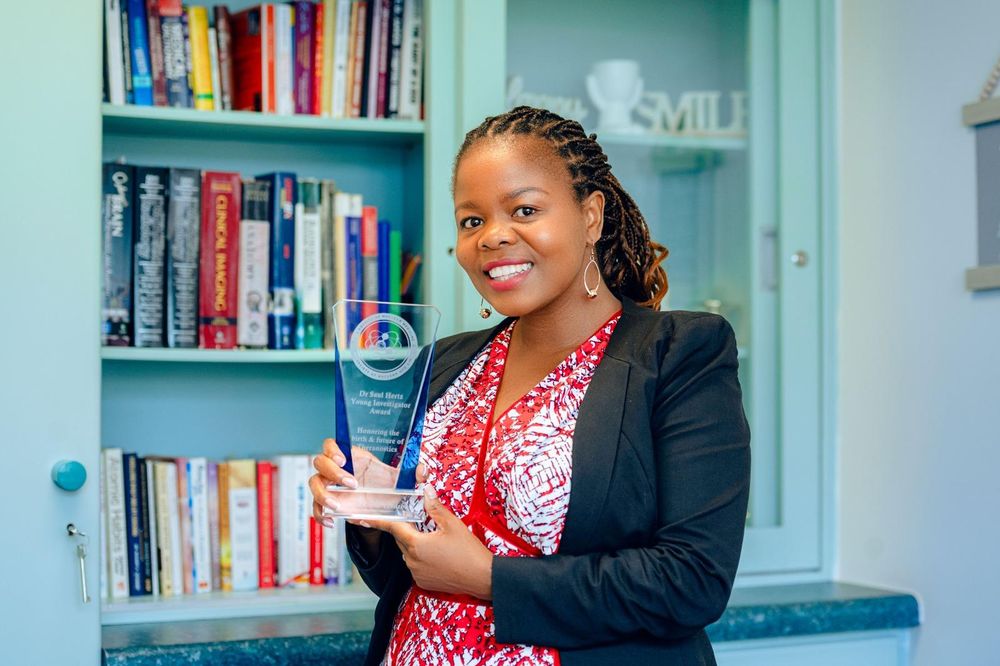
That research is bearing fruit for Dr. Hadebe, who is a lecturer at the University of KwaZulu-Natal (UKZN) and head of the Nuclear Medicine Clinical Unit at Nkosi Albert Luthuli Central Hospital, Durban. He recently won the Saul Hertz Young Investigator award at the Theranostic World Conference, a health event held for the ninth time in Cape Town, Western Cape, last week.
Dr. Hadebe’s award from Hlokozi, Xobho, is to honor him for the research he did in his medical studies, which was supported by his supervisor Professor Mariza Vorster.
Narrating his interest in these studies, he said that he was also encouraged by the fact that cancer continues to be a challenge around the world, and that new ways to try to overcome it are urgently needed.
“The research I have done is a good and helpful method in the situation we are facing, as we use what we call Theranostic – which works by carefully researching what we are treating at that time. It is dealt with directly using its plan called search and destroy, which involves injecting the patient with a type of injection that can help us see where the cancer particles are and how far they have spread in the patient’s body. This enables us to kill them all in an efficient way and when we are done – the patient is left with no problem,” said Dr. Hadebe.
He said it made him very sad to see his father become dizzy due to the negative effects of some of the drugs he was using to try to fight the disease, which ended up causing him to die in 2022.
“My father is the person who encouraged me to continue this work even though he is no longer in the world, but I see him in each and every patient I treat, which makes me motivated to continue working hard to find a cure for cancer,” he said.