






Brett Herron, GOOD-LP en die party se sekretaris-generaal. (Foto: Facebook / Brett Herron Politics)
The political party Good says the City of Cape Town should reimburse residents after the Cape Town High Court ordered last week that the metro’s implementation of its tariff model for a cleaning charge is unlawful, unconstitutional and invalid.
The controversial rates involved a cleaning charge and fixed rates for water and sanitation which were calculated on the basis of property value.
Brett Herron, secretary general of Good, says a significant amount of money has been collected from residents with these rates in the past year.
That’s why the party is now seeking legal advice on the appropriate next steps to force the metro to comply with the ruling – and to reimburse residents.
“Although the court was clear about the illegality of the city’s fixed cleaning, water and sanitation tariff, and set it aside with effect from June 30, 2026, the result remains unresolved,” explains Herron.
The court’s ruling therefore left a “burning issue of unjust enrichment” unanswered, he says.

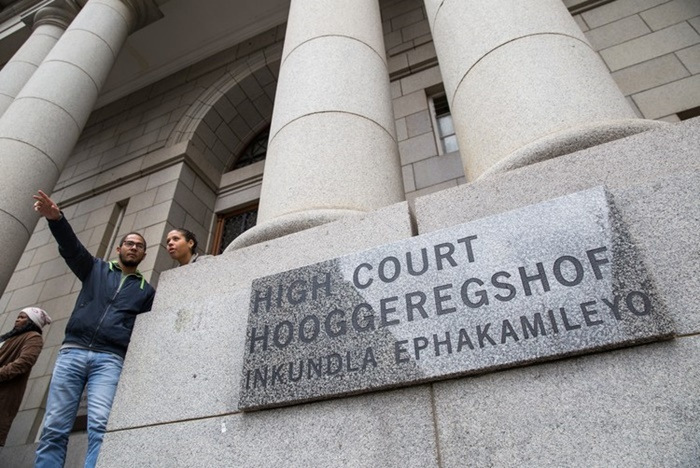
The High Court in Cape Town. (Archive photo: Ashraf Hendricks/GroundUp)
Appeal is only going to cost more money
Herron says the fact that Cape Town Mayor Geordin Hill-Lewis and his administration want to appeal the verdict means they are prepared to spend even more public money.
He says taxpayers should realize that the metro is not obliged to continue to defend its unlawful position, “although it has virtually unlimited taxpayer-funded legal resources at its disposal”.
Good is therefore now considering his legal options: either a counter-appeal or a further application for equitable relief, or both.
The party claims the unlawful rate scheme has targeted groups of people for extra payments they simply cannot afford, including those who have inherited property or whose property values have risen exponentially due to neighborhood renewal (also known as gentrification) or development.
“If the mayor is allowed to ask residents what he wants, it would in practice force members of these groups to consider downgrading their place of residence – the diametric opposite of development.”
Herron says taxpayers should not be misled by Hill-Lewis’ interpretation of the court’s ruling. “The fact of the matter is that the mayor’s illegal rates do struggling families no favors and offer them no relief.”


Geordin Hill-Lewis, Cape Town Mayor (Photo: Facebook)
Mayor says it protects low-income households
However, Hill-Lewis explained last week that using property values to determine fixed costs is to protect low- and middle-income households.
“The only alternative to this is that everyone has to pay a fixed cost, regardless of whether they are low-income households or well-off,” Hill-Lewis insisted.
“It remains my firm belief that Cape Town cannot truly work unless it works for everyone. Every resident of every community depends on a future where everyone has access to basic services and infrastructure that create opportunities for work and growth. Cross-subsidisation – where those who are better off help us finance services for the less fortunate – is the fairest and most sustainable way to ensure a working city of hope for all.”
However, Herron says Hill-Lewis’ suggestion that the only alternative to his illegal tariff model is a fixed charge for everyone is false.
“This is a political scare tactic, not a legal or policy reality.
“Hill-Lewis is not a king for whom the legality of his policies and practices is of no importance,” says Herron. “Residents are entitled to fair billing, legal rates and accountability for charges already levied on them.”
The City will analyse and consider its options for appealing a court ruling that certain fixed charges should not be linked to property value for the coming financial year starting on 1 July 2026. The ruling does not impact current 2025/26 tariffs.
See: https://t.co/fihIy3hj8n pic.twitter.com/JzOmiZWRud
— City of Cape Town (@CityofCT) April 30, 2026
According to Herron, the municipal framework provides for progressive, consumption-driven rates and targeted support for low-income households “that would not require the mayor to use illegal billing structures”.
“The obvious risk of appeal and the continuation of the unlawful fixed charges in the next financial year, and possibly beyond, is that if the judgment is confirmed on appeal, the amount owed by the city to the people of Cape Town will be significantly more.”
Herron says Good is meanwhile anxiously waiting for the Gauteng High Court’s ruling in the case between Cape Town and the National Energy Regulator of South Africa (Nersa).
“If the Gauteng court rules that Cape Town’s decision to charge rates above those set by the regulator is unlawful, these over-recovered charges must also be refunded to residents,” says Herron.