




Rosie Schoeman, founding member and former board member of the KKNK. (Photo: Jhua-Nine Wyrley-Birch/Maroela Media)
The festival dust on Oudtshoorn has settled down, but for aunt Rosie Schoeman, founding member and former board member of the KKNK, this festival has always been more than just a celebration of the arts.
Rather, she describes it as a kind of “window” to a different, inclusive South Africa, one that profoundly changed her own perspective on the world, and especially her community.
“The festival gave me, who was only a conservative peasant auntie, an understanding and feeling for a wider South Africa and for my town and its people,” she tells Maroela Media during the week of the 30th edition of the festival.
At her retirement home on Oudtshoorn, aunt Rosie, as she is widely known, still receives her guests with the same warmth you would expect from a peasant aunt: Tea is served in fine cups and saucers, of course with a slice of milk tart.
At 85, she talks with alert eyes and an almost mischievous smile about a life path that spans decades – one that has taken her from farm life and social work to the heart of one of South Africa’s biggest arts festivals.
She was born in Middelburg in the Eastern Cape, but went to school in Oudtshoorn from early primary school to matric.
After her studies in social work at Stellenbosch University and further postgraduate studies in Port Elizabeth, she and her late husband – a farmer from “the tough Schoemans of this world”, as she describes him – settled back in the Little Karoo.


Aunt Rosie keeps notes of her impressions of KKNK productions. (Photo: Mizanne van Wyk/Maroela Media)
It was precisely her involvement in community work and her strong local network that involved her in the KKNK’s creation.
“Nic Barrow, who at the time planted the seed for the festival as a local businessman, his wife taught my daughter. He was not born in Oudtshoorn and wanted to involve residents of the town to be part of the festival’s first program. His wife introduced me,” she says.
She was at the very first official KKNK meeting and ended up serving on the board for 25 years.
“In those days, we did everything ourselves. For example, there was no money for catering for big functions or important guests. I was just the food auntie,” she jokes.
“There was nothing here. There wasn’t an air-conditioned hall or scaffolding that had been built that led seats down to the stage. It was just very, very hot school halls.”
However, she emphasizes how the festival also tried from the outset to not only be an art platform, but a space where communities could get to know each other and build together – especially given the era in which it was started.

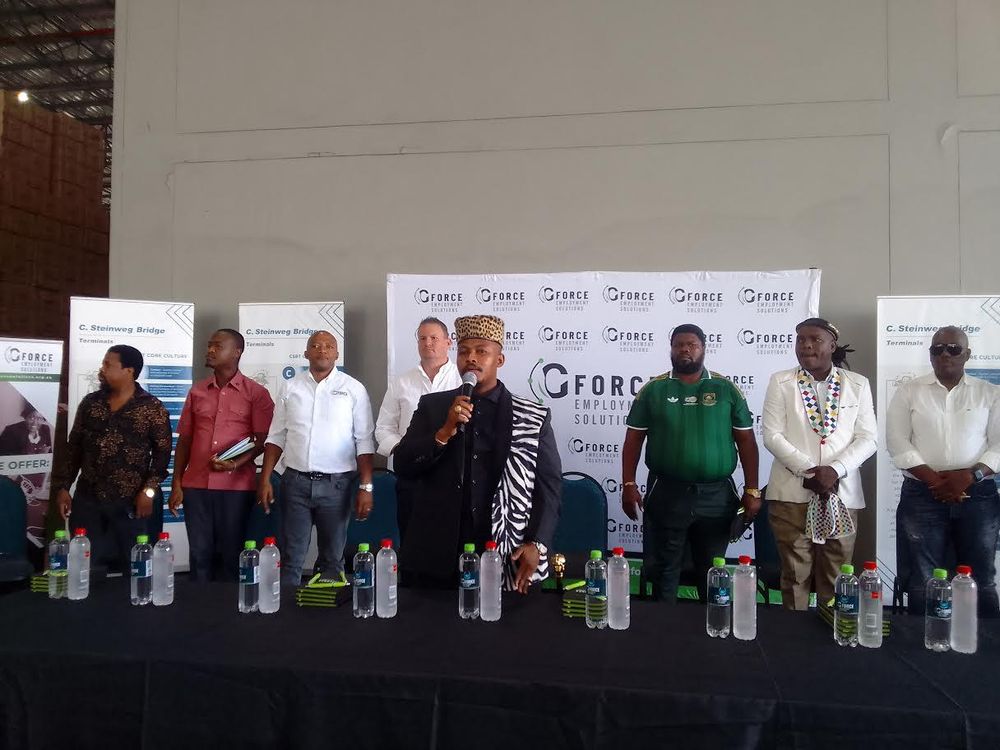
Aunt Rosie together with politicians, celebrities, former and current board members, and heads of the KKNK at this year’s festival. (Photo: Mizanne van Wyk/Maroela Media)
According to Schoeman, it was people like the activists David Piet and Franklin Sonn, with whom she also formed close friendships over the years, who played an important role in building bridges between the communities of Oudtshoorn.
“David was a freedom fighter in his time, but after 1994 he said the past is over; now we are building a nation together. His attitude has always stayed with me.”
Although there were challenges, even tense moments during the early years among organizers and residents, she believes the attitude with which the festival was approached was decisive.
“It’s all about how you go about something. There was a conscious effort from the beginning not to be exclusive, and although we didn’t immediately manage to create that impression, that was always the goal.
“You just have to hold each other’s hands and be honest with each other, and you also have to be willing to work hard.”
Today, she says, the KKNK is part of Oudtshoorn’s “DNA”.


The KKNK festival grounds. (Photo: Jhua-Nine Wyrley-Birch/Maroela Media)
“I don’t know what we would do without the festival. It’s not just an economic injection – it creates jobs, it brings people together and it energizes the town.”
Over the years, there has also been a noticeable growth in participation from different communities – something she notices year after year and which remains particularly meaningful to her.
Although she never considered herself an “expert in the arts”, she always maintained an active interest, she says. Even now, years after her term on the board, she still attends as many shows as possible. Last year she saw 25 productions, an achievement she proudly mentions.
She even keeps a notebook handy in which she writes down her impressions of productions.
“When I was on the board, I didn’t even have time to watch a show. Now I enjoy sitting in a full hall and seeing how people appreciate it. Yes, sometimes I think something is a bit strange or it goes over my head,” she laughs.
“But that’s part of the experience.”
Among her favorites is the pianist Charl du Plessis, whose performances she attends every year if he is at the festival.

KKNK 2026. (Photo: Jhua-Nine Wyrley-Birch/Maroela Media)
She also mentions that she recently produced productions such as Bushman and Lena in Atropa: The Revenge of Peace enjoyed, even if certain elements sometimes “challenged” her.
“There was a beautiful girl in there Atropa who had to be completely naked in one scene. It’s getting past me now, but my friend next to me was almost dead,” she says with a laugh.
“She confessed all her sins there and then before the Lord.”
Schoeman also has high praise for the current CEO, Hugo Theart.
“He manages the festival masterfully. His thinking is fresh, he’s innovative and he handles people excellently. We couldn’t have found better.”
Despite her many years of involvement, Schoeman is still constantly looking ahead. It is a mindset that she believes is essential for the continued existence of the festival.
As the visit comes to an end, she does not say goodbye with empty hands, but with a jar of home-made apricot jam, pressed into her hand with an invitation to use her spare room when we visit the town again.
“We cannot take the festival and people like you who travel from far away for granted, and I think unfortunately many people already have. We must appreciate this, and the impact of the festival and the arts, but also continue to build on it.”