





Members of a Nama community. (Photo: Annual Nama Cultural Festival – Namibia/ Facebook)
-
AfriForum asked cultural communities and traditional leaders to work together to implement art. 235 of the Constitution to protect.
-
The organization warns that an amendment to it threatens cultural communities’ right to self-determination.
-
Nama is the second oldest language in South Africa, but is not recognized as an official language.
AfriForum asked cultural communities and traditional leaders to work together to implement art. 235 of the Constitution to protect.
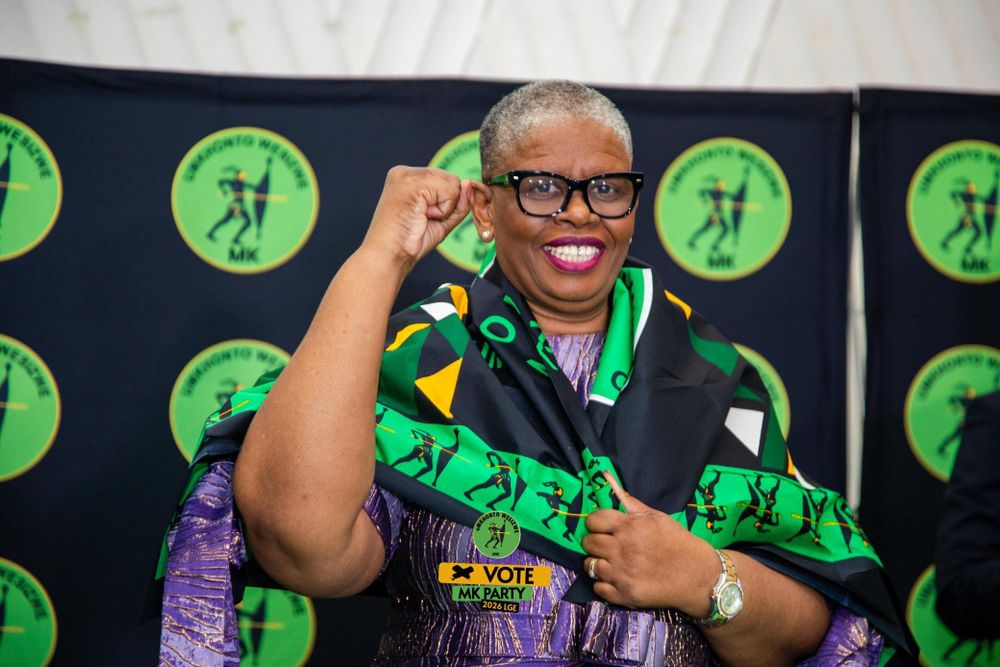
The civil rights organization’s appeal follows after Mzwanele Manyi, a member of parliament from the MK party, gave notice of an intended proposed amendment bill that s. 235 want to revoke. The article recognizes the right to self-determination of communities with a common cultural and linguistic heritage.
Barend Uys, AfriForum’s head of intercultural relations and cooperation, says the proposed amendment is an “attack on all cultural and other communities that strive for independence, cultural autonomy and self-determination in terms of international law”.
According to Uys, the deletion of the article will conflict with several international agreements, including the African Charter on Human Rights and Peoples’ Rights and the United Nations Declaration on the Rights of Indigenous Peoples.
AfriForum argues, among other things, that art. 235 is consistent with international law and that the actions of communities and traditional leaders fall within the framework of this article.
According to Uys, the MK party is trying to pretend that communities like Orania are abusing the article to justify their existence. He believes it is a “smoke screen for actions aimed at the destruction of cultural communities, cultural and property rights”.
“The MKP claims that art. 235 is ‘anti-Africa’ and that the protection of individual rights is sufficient for cultural and group rights. However, the African Charter protects individual and group rights and considers self-determination as an inalienable right – it is clear that it is in fact the MKP that is ‘anti-Africa’,” says Uys.


Members of a Nama community. (Photo: Annual Nama Cultural Festival – Namibia/ Facebook)
Retention of article
Captain John Witbooi, tribal leader of the Witbooi-Nama tribe, says there are thousands of people in South Africa who form part of the Nama language and culture community. It is already offered at three schools in the Richtersveld and Namaqualand.
Nama is also offered as a university subject in Namibia and there are numerous manuals, books, Bibles and hymnals in Nama.
“Nama is a completely undeveloped language,” says Witbooi.
“Nama comes from the oldest South African language, the Bushman language, and you cannot distort documented facts. You cannot distort history which proves that Nama is one of the oldest languages and has been spoken in South Africa since before 1488,” he says.
“Our history and language are still suppressed today, just like then, by the ANC government,” he says.
He says the Witbooi-Nama tribe stands with AfriForum in the fight for the recognition and preservation of indigenous language and cultural communities.
Afrikaans and Nama are many tribes’ culture and upbringing languages. We don’t mess with black languages, why do they mess with our languages?
“My tribe supports AfriForum’s view. We are a minority group and the groups must support each other. Our threat is your threat and your threat is our threat.”
According to him, the government excludes the oldest South African communities rather than supporting them.
“This government has done nothing for 32 years, and you cannot build South Africa if you exclude its own people,” he says.