



Minister Enoch Godongwana (Photo: Parliament of RSA/X)
The price threshold for the purchase of ministers’ and deputy ministers’ official cars has been increased from R800 000 to R1.1 million after it was apparently a struggle to purchase suitable official cars for R800 000.
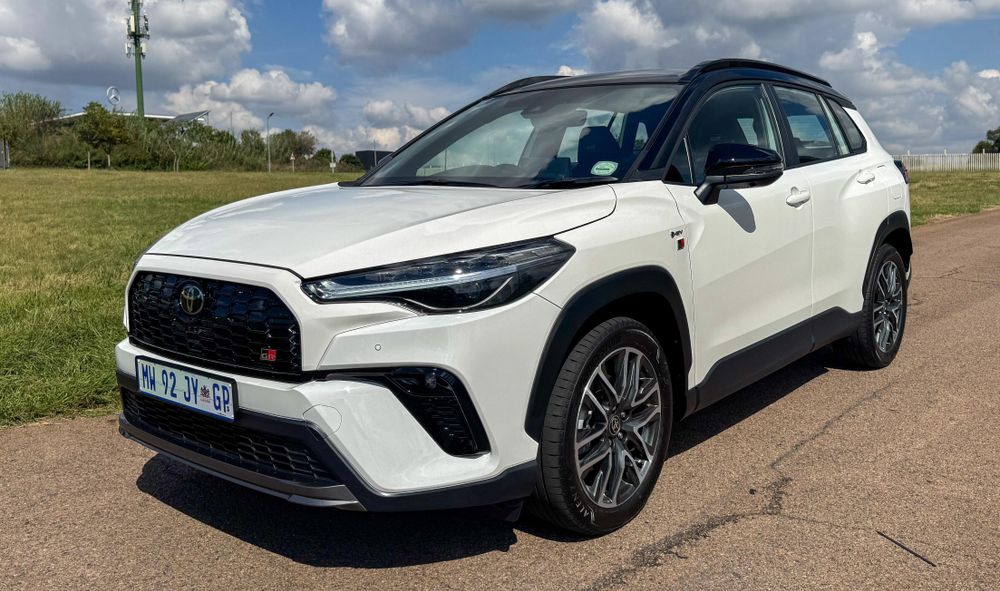
For this price you can buy a Toyota Fortuner, Toyota RAV4, Volkswagen Tiguan, Ford Ranger and Volvo XC60 in South Africa.
Enoch Godongwana, the finance minister, revealed in response to a recent parliamentary question that he had received numerous submissions and complaints that R800 000 was not enough for a vehicle suitable for official duties.
The national treasury already raised the price threshold for official cars to R1.3 million in July last year.
“What fiscal considerations influenced the decision to maintain and/or increase the specified thresholds in the context of current budget constraints?” asked Nobuntu Hlazo-Webster, deputy leader of Bosa, in a written parliamentary question about Godongwana.
Godongwana explained in response that departments “found it difficult” to find a suitable vehicle within the existing price threshold. The price includes VAT, security upgrades and maintenance plans.
“The national treasury’s own industry analysis confirmed that inflationary adjustment over the five-year period eroded the value of the threshold and prices exceeded the set price limit for most vehicles,” says Godongwana in his reply.


Pres. Cyril Ramaphosa and Enoch Godongwana, Minister of Finance. (Photo: Kopano Tlape/GCIS)
“It was therefore increasingly difficult for departments to locate vehicles suitable for official duties within the price threshold of R800 000.
“The price threshold has consequently been adjusted to R1.1 million.”
In his reply to Hlazo-Webster, Godongwana explains that he, as the finance minister, is empowered, in terms of the guide for members of the executive authority, to adjust the price threshold for official vehicles annually in consultation with ministers.
However, he makes it clear in his answer that the price threshold should not be regarded as a target.
“Departments are permitted and encouraged to use their own discretion to purchase vehicles for official use that cost less than the price threshold (including VAT, security upgrades and maintenance plans) if such vehicles are available.”
Godongwana says in his reply that the national treasury does not at this stage have a consolidated figure for the total annual cost of official vehicles and related benefits.
“The purchase of vehicles is a decentralized function at national and provincial level,” explains Godongwana.
He says that departments are required to record the details of all acquisitions of vehicles, and the cost of vehicles for official use by members of the executive authority, in the respective departments’ annual report at the end of each financial year.
“A Reporting Template has been developed for this purpose to enable the Treasury and other relevant stakeholders to quantify the costs for oversight and reporting. Other related benefits provided in the guide for members of the executive are outside the scope of the finance minister.”


Archive photo for illustration purposes only. (Photo: Tania Heyns/Maroela Media)
‘Offensive’
Roger Solomons, spokesperson for Bosa, says Godongwana’s increase in the price threshold is a slap in the face for millions of South Africans who are burdened by high living costs and now another sharp rise in the price of fuel.
Regarding Godongwana’s answer regarding a consolidated figure, Solomons says: “The minister effectively held his hands in the air, shifted the responsibility and avoided a clear answer.”
Solomons says it is worrying that the treasury was able to carry out a detailed internal analysis to justify Godongwana’s increase in the price threshold, citing inflation and procurement constraints, but cannot say how much the increase will cost the taxpayer.
“This is very worrying as the government can calculate the rising cost of luxury vehicles for politicians, but cannot quantify the total burden these benefits place on the public purse.”
Solomons says it seems as if there is a blank check for political elites to be driven around in luxury while citizens are forced to consider every kilometer and count every rand just to keep their heads above water on a monthly basis.


Enoch Godongwana, Minister of Finance. (Photo: GCIS)
“South Africans are being told to tighten their belts while paying more at the fuel pump and absorbing rising food prices. Yet the government’s response to make it easier for politicians to gain access to more expensive vehicles is isolated from the very pressures citizens face every day.
“Bosa believes that this reflects a broader failure of accountability and priorities within government. You can’t manage what you don’t measure and the Treasury’s inability to provide a full cost of executive benefits undermines any claim to responsible financial management.”
Bosa appealed to the finance minister to publish a complete, consolidated account of all executive benefits, including official vehicles; review and reduce these benefits in line with current fiscal constraints; and prioritizing meaningful relief for South Africans over the convenience of politicians.