



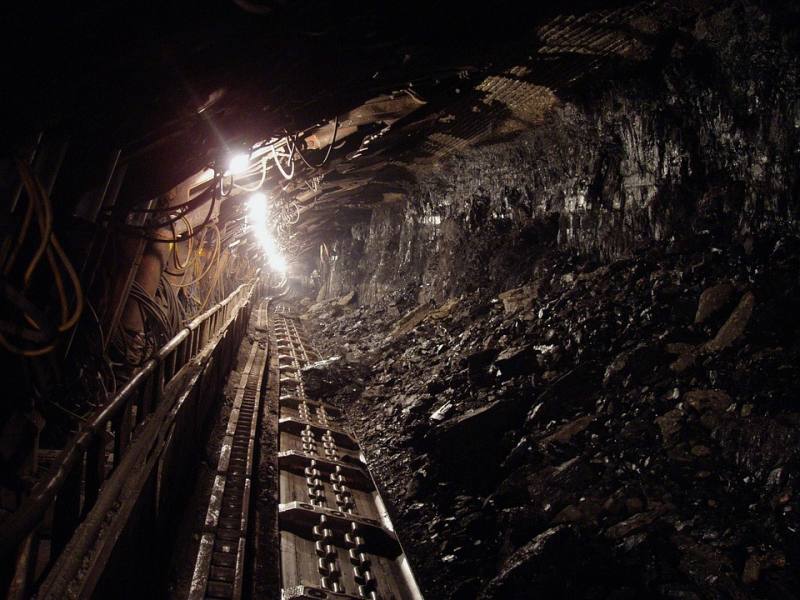
Archive photo for illustration. (Photo: Hangela/Pixabay)
Solidarity says Cyril Ramaphosa’s defense of black economic empowerment (SEB) in the mining sector is not in line with the reality of an industry that has shrunk over decades.
This follows after Ramaphosa said in the National Assembly last week that criticism against the BEE is unfounded and that opponents of the policy “should be ashamed” because, according to him, they are pursuing white supremacy.
The president described mining after 1994 as a success story of transformation.
However, according to a report from the Solidarity Research Institute (SNI) which was launched on Tuesday, the opposite is true and transformation policies such as BEE have contributed to the decline of the sector.
“Compared to the eighties, mining today only accounts for 4.4% of economic activity, compared to 20% at the time,” says Theuns du Buisson, economic researcher at the SNI.
“The sector employs only 2.8% of working people. In 1994 it employed 613,000 people compared to today’s 476,000. This is a loss of 137,000 jobs.”
According to Du Buisson, this contraction is a direct result of poor mining policy that prioritizes transformation over growth and sustainability.
“When the president praises transformation in a sector, one would at least expect the sector to perform,” he says.
The report further argues that South Africa’s mining industry has failed to take full advantage of high international commodity prices and that the sector has in fact declined drastically.
According to the SNI, SEB also mainly benefited a small group rather than ordinary workers.
“A total of just 46 people received the vast majority of benefits, while workers received a mere 15% of BEE funds,” says Du Buisson.
Solidarity argues that employee share schemes offer a better alternative to existing BEE targets. According to the report, workers currently own around 5.4% of mining interests, while almost a quarter of that is in the hands of BEE entrepreneurs.


Theuns du Buisson (Photo: Provided/ Solidarity)
“It is workers who should benefit from this,” says Du Buisson.
The report also points to the Mineral and Petroleum Resources Development Act of 2002 as the core of the state’s transformation policy in the sector.
According to the SNI, the law places all mineral rights under the custody of the state, which means that only the government can grant licenses for mining and prospecting.
The organization believes that this system is accompanied by strict BEE conditions that hamper the industry. According to the report, companies that want to prospect must be at least 51% black-owned.
“These regulations have actually hampered the industry and that is why Ramaphosa’s praise for them is so badly misplaced,” says Du Buisson.
“While other countries have been able to expand their mining sectors in recent decades, it has stagnated in South Africa.
“Among other things, the president praises the policy that strips landowners of mineral rights, while it actually contributes to the paralysis of the industry.
“If the president wants to find a BEE success story somewhere, he should look elsewhere. Because in mining he will definitely not find it.”