




(Archive photo: Christel Cornelissen/Maroela Media)
The Gauteng Department of Education (GDO) is reconsidering its model for the decentralization of municipal services to public schools as a matter of urgency. This follows in the midst of a debt burden of almost R600 million to municipalities and Eskom, serious infrastructure backlogs and a recent High Court order against cutting off power at schools in the province.
Lebogang Maile, Gauteng MEC for education, announced this weekend that the province’s education system is suffering from major financial challenges.
According to the statement, after 1994, Gauteng’s education system – in terms of learner intake, more than doubled – from 1,408,237 learners in 1995 to 2,835,168 this year. The phenomenon is attributed to internal migration to Gauteng.
However, budgets have not kept up with this growth, says Maile.
“Although the provincial education budget has risen significantly, its real value has not kept pace with learner growth and inflationary pressure, which severely hinders the building and maintenance of schools and leads to severe overcrowding in almost all 15 education districts,” said the MEC.
Supreme Court ruling brings relief
This financial pressure has led to serious service delivery disruptions that disrupt school education.
A court order on 5 May did bring relief when the Pretoria High Court ordered the Tshwane metro to immediately restore power supply to schools, which had been cut off due to outstanding property taxes.
The ruling prohibits further power cuts and confirms that schools may not be cut due to the authorities’ fault, as education is a constitutional right that must be protected regardless of socio-economic backgrounds.
Maile expressed his gratitude to municipalities that have pledged to honor the ruling, although he acknowledged that local authorities themselves are experiencing a serious revenue crisis due to the high cost of living.
The total municipal debt of schools in the province amounts to R583.9 million, of which R4.38 million is currently disputed. According to Maile, the debt, which has accumulated for more than 60 days, amounts to the following:
- Johannesburg: R390.71 million
- Ekurhuleni: R75.14 million
- Tshwane: R51,7 million
- Emfuleni local municipality: R36,3 million
- Lesedi local municipality: R8.84 million
- Merafong City- local municipality: R6,9 million
- Mogale City- local municipality: R6.3 million
- Midvaal local municipality: R3.99 million
- Rand West City- local municipality: R916 569
In addition to the municipal debt, Gauteng schools also owe R6.32 million to the national power supplier Eskom.
The crisis is exacerbated by allegations that municipalities are overcharging schools through erroneous meter readings, estimated billing and sudden inexplicably high bills without verification, says Maile. Schools have also complained that historic debts from the pre-decentralization period are being unlawfully charged to their current accounts, and that they have to pay expensive business or commercial rates.
In addition, there is an imbalance between rising municipal rates and the annual allocations that schools receive under the National Norms and Standards for School Funding (SASA section 35). This is further complicated by a lack of transparency and unlawful fixed charges or miscellaneous expenses on municipal states, explains the MEC.
Due to the decentralization model, the payment of municipal bills has shifted from the department to the individual schools and their school governing bodies. The decentralization was supposed to promote better financial management, faster procurement and greater accountability through audits.
However, Maile conceded that the pitfalls at present are immense. Many schools, especially those that charge no fees, are struggling to pay the rising fees with their limited allocations, while some governing bodies lack the necessary financial management capacity or administrative skills to manage them.
This leads to late payments, mounting debts, court cases and water and power cuts that cripple computer labs, lighting and sanitation, thereby creating health risks for learners.
Review on the way


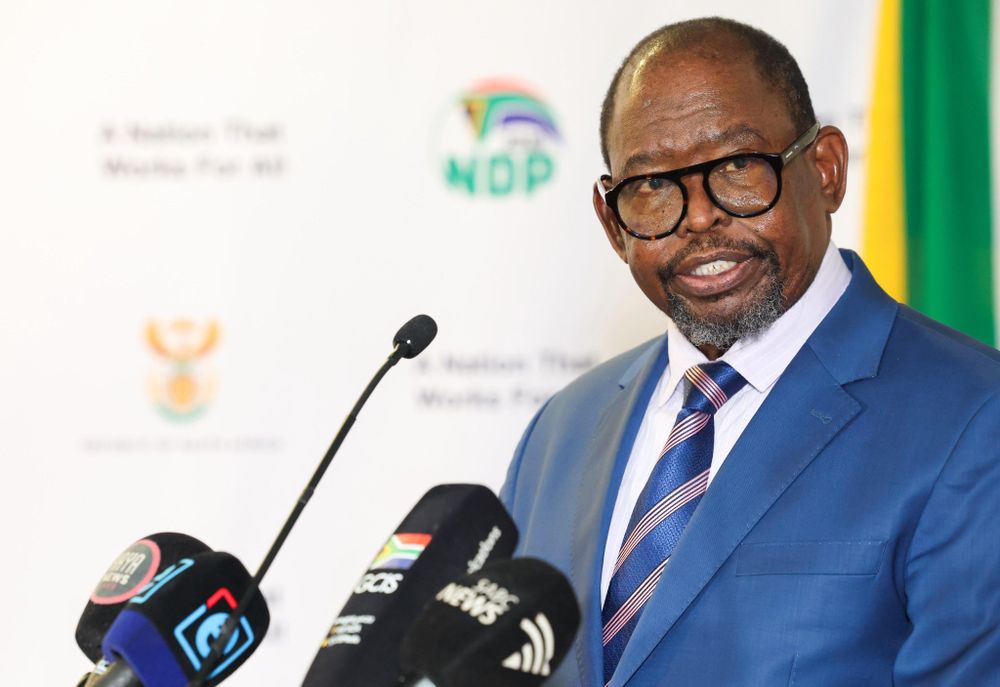
Lebogang Maile, MEC for education in Gauteng (centre), during the announcement. (Photo: GDO)
Due to these obstacles, the department is in the process of formally reviewing the decentralization model and the MEC is liaising with relevant stakeholders to find new solutions. According to Maile, it is essential that administrative functions are handled by expert staff to prevent government failures.
“Ultimately, schools must focus on their sole mandate and that is to successfully deliver the curriculum,” Maile emphasized.
In the meantime, the department will continue to work with municipalities to ensure that the High Court order is complied with.