


The long-distance bus service Intercape welcomes the arrest of seven people who allegedly disrupted bus services in the Western Cape. (Photo: Intercape/Facebook)
The long-distance bus service Intercape welcomes the arrest of seven people who allegedly disrupted bus services in the Western Cape, but says its passengers and staff have already paid a very high price for the continued violence that began in 2016 and has increased dramatically in recent years.
Bonke Makalala, Simphiwe Matshala, Mzuvukile Mbiyo, Siyanda Dyanti, Gwendoline Mazele, Siphelele Kwaza and Simphiwe Gxumayo appeared in the Cape Town Magistrate’s Court on Tuesday on charges relating to serious organized crime, allegations of extortion, intimidation and breach of the Road Traffic Act.
Johan Ferreira, CEO of Intercape, says crime networks in the long-distance transport industry must be investigated and dismantled. He says arrests and ongoing investigations are only the beginning of exposing extortion and collusion networks and a long-term campaign of violence that has plagued the public long-distance transport industry for years.
The bus service praised the Western Cape taxi violence task force and the National Prosecuting Authority (NPA) for the work they have done so far.
“Extortionists acted with impunity, demanding that Intercape increase its prices, limit the number of buses on routes, modify timetables and stop operations in certain towns. “When the company refused, the struggle continued with armed attacks, stonings and shameless acts of intimidation.”
Ferreira says prosecuting authorities must follow up on the issues, including identifying and arresting the full network of those responsible, and people who orchestrated, financed and managed the campaign. “The focus must be on entities and individuals believed to have paid extortion money that supported crime and crime networks.”
Ferreira says the Act on the Prevention and Combating of Corrupt Activities (known as Precca), deals specifically with the responsibility of all citizens, corporate and private, to report criminal conduct such as extortion attempts.
He believes that the taxi industry’s coordinated demands on Intercape and other bus operators are the clearest form of collusion, blatant price fixing and market division and are directly contrary to the Competition Act. Intercape has already submitted eight full cases with comprehensive evidence to the Competition Commission.
“The commission refused to investigate.”
Intercape also appealed to the parliament to fulfill its mandate and ask the commission to account for the alleged lack of action.
Since 2020, Intercape has reported more than 220 incidents of violence and intimidation.
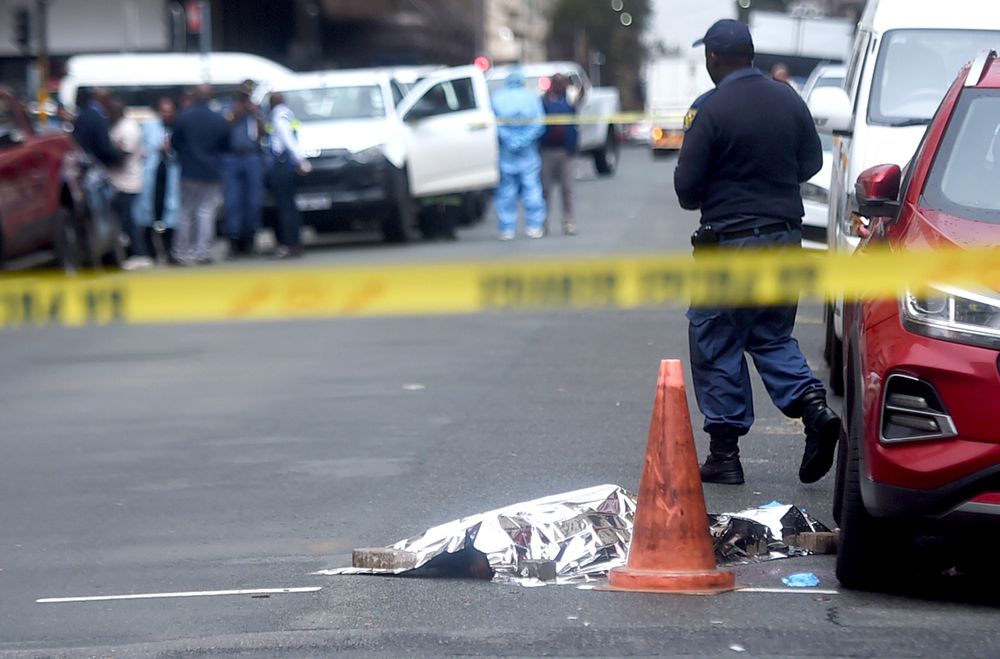
Bangikhaya Machana, an Intercape bus driver, was shot dead outside Intercape’s depot in Cape Town on 28 April 2022. Some of the company’s bus drivers have already been shot at when they drive through the Eastern Cape, the focal point of this violence. There have also been incidents in other provinces.
Ferreira says the arrests should serve as a catalyst for further action.
The Makhana High Court declared in 2022 that the then MEC for transport in the Eastern Cape had acted illegally by requiring Intercape to negotiate with local taxi associations on the price, frequency and routes, and suspending Intercape’s operations pending the negotiations.
In his reasons, the judge found “undisputed evidence” that the MEC works as a liaison for rogue taxi associations and insists on and “acquiesces” to their criminal behaviour. In November last year, the current MEC falsely claimed in public that the bus service was being operated without valid permits, a statement which the High Court has since found unfounded.
Intercape has also appealed four times to pres. Cyril Ramaphosa did to intervene. The latest letter was addressed to him on March 16. In this letter, the president was asked to deploy the army, especially in the Eastern Cape, to help combat the problem. The president was also asked to appoint a presidential commission of inquiry to investigate, among other things, crime, collusion, possible corruption in the police and possible links between state organs and the minibus taxi industry.
“None of the letters got a substantial response.”
Ferreira says that correspondence sent over the years to the offices of the ministers of police and transport with requests for urgent meetings has gone unanswered.
He says that a court order that stated in September 2022 that a complete security plan must be developed and introduced has still not borne fruit.
“In December 2023, the police’s national and provincial commissioners were found guilty of contempt of court.”
Ferreira says the arrest of the seven people gives a glimpse into the dangerous world of organized crime networks that revolve around the minibus taxi industry in South Africa.