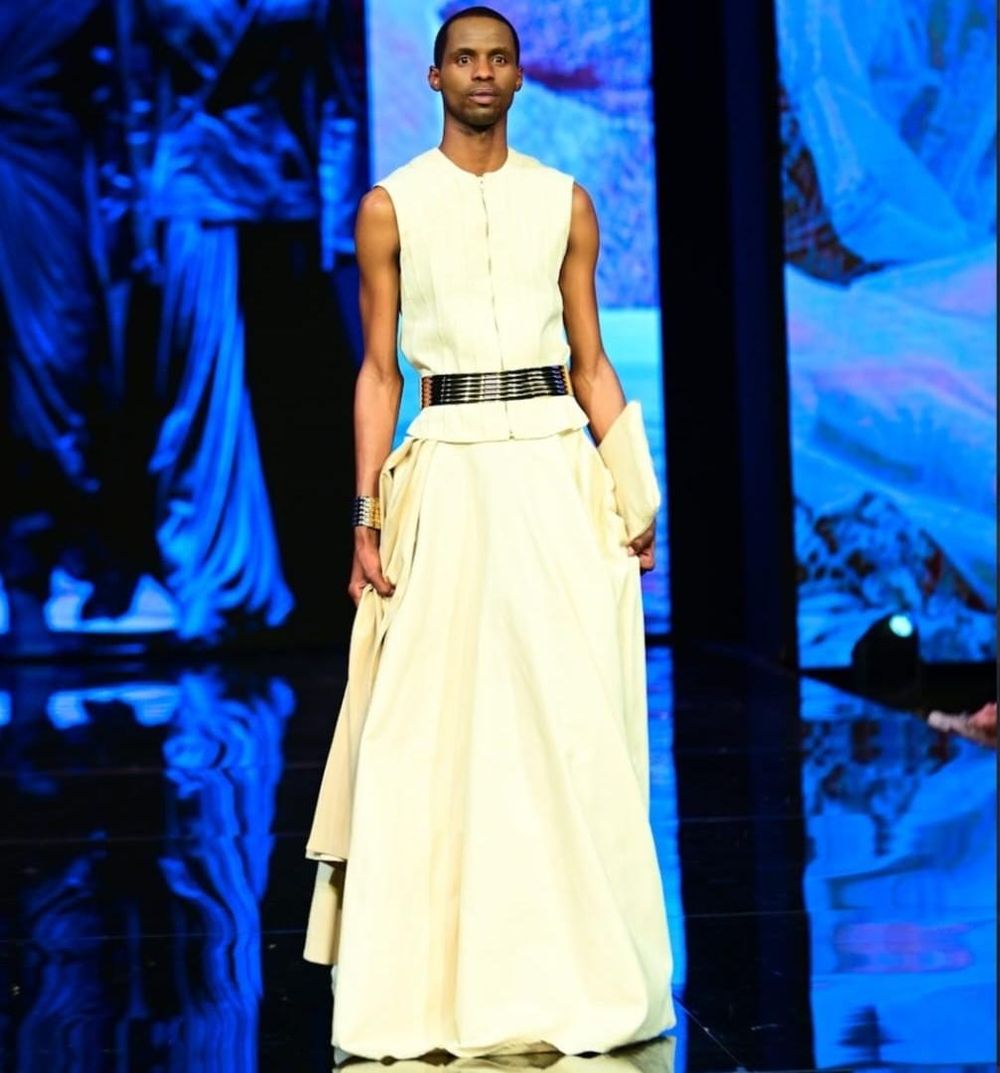




Pres. Cyril Ramaphosa and adj. pres. Paul Mashatile makes sure Minister Enoch Godongwana looks decent for his budget speech. (Photo: Parliament/X)
The government will spend R2.67 billion (“trillion”) in 2026-’27, a large portion of which will go to social grants for eligible South Africans.
According to the National Treasury, the social wage will represent approximately 60% of all non-interest spending over the medium term.
This year, the so-called covid-19 allowance has been budgeted again.
An additional R36.4 billion has been allocated to extend this allowance until 31 March 2027. The allowance will amount to R370 per month per beneficiary.
Social grants ⬇️
For 2026/27, social grants are allocated R292.8 billion, enabling the following increases:
????The old age grant, disability grant and care dependency grant rise by R80 in April 2026, to R2 400.
????The war veterans grant also increases by R80 to R2 420.
???? The… pic.twitter.com/vOYvetpHXs
— South African Government (@GovernmentZA) February 25, 2026
Old age allowance, disability allowance and care dependency allowance will rise to an average maximum of R2 400 in April 2026, while the allowance for war veterans will increase to R2 420.
Foster care allowance is increased to R1 295 and child allowance to R580.
The National Treasury says expenditure remains strongly redistributive in line with the government’s commitment to reducing poverty and inequality.
Basic education, health and social protection represent 70.3% of the social wage in 2026-27 and support 13.6 million school children, healthcare services to 84% of the population and 26.5 million beneficiaries of social grants.


(Source: National Treasury)
Basic education
Spending on education, a total of 23.2% over the medium term, represents the largest part of the state’s expenditure. The 2026 budget provides for basic education to receive R344.7 billion in 2026-27.
Expenditure on post-school education and training grows by 2.2% over the medium term.
The National Student Financial Aid Scheme (NSFAS) will spend R54.3 billion in 2026-27 to provide bursaries to 744 203 needy and academically deserving students.
Basic Education ⬇️
In terms of consolidated expenditure, spending on education remains the largest component at 23.7 per cent over the medium term.
Basic education receives R22.7 billion for carry-through costs announced in May 2025. Early childhood development receives the… pic.twitter.com/tiefw6lvmN
— South African Government (@GovernmentZA) February 25, 2026
Early childhood development
Spending on early childhood development rises from R12.2 billion in 2025-26 to R18 billion over the medium term. This will enable the expansion of early childhood development services to an additional 300,000 children.
However, provision is not made in the new budget for pres. Cyril Ramaphosa’s plan to end malnutrition among young children by 2030.
Health
Spending on health will increase by 4.2% to R334.3 billion in 2028-29.
Primary health care, delivered by district health services, provides the most accessible and cost-effective care and 44.4% of the health budget is allocated to this.
The remuneration of employees still represents the largest part of the health budget (64.6%) and R21.3 billion is therefore allocated to the health sector over the medium term for the remuneration and employment of doctors and to supplement deficits in goods and services expenditure.


Archive photo for illustration purposes only.
(Photo by Phill Magakoe/AFP)
Money for HIV after USA withdraws aid
R410 million will be reprioritized over the medium term from the Department of Health to the South African Medical Research Council to offset research grant funding withdrawn by the US.
This allocation forms part of a co-financing agreement with international donors to sustain important HIV/AIDS research programmes. A further R24 million is reprioritized over the medium term to the Office of Health Standards Compliance to enable it to fill critical posts and increase the number of health facility inspections carried out each year.
Police, army, prisons
Just over R140 billion rand has been budgeted for the police service. About 72% of this budget will go to compensation of employees, as the police have many employees, according to the treasury’s explanation.
A further R59.3 billion has been earmarked for the army and the state security agency.
“Madam, the speaker, the president in his state of the nation address announced the deployment of the army together with the police to fight illegal mining and gang violence. To support this and other efforts to strengthen law and order, spending on peace and security rises from R268.2 billion in 2025-/’26 to R291.2 billion in 2028-29,” Godongwana announced in parliament on Wednesday.
An additional R2.7 billion is allocated to defense over the medium term to improve operations, including maintaining the air force’s fighter aircraft capability and purchasing uniforms.


Army members on parade at the State of the Union Address in Cape Town. (Photo: SANW)
“In addition, we allocated R1 billion to the police service and another R1 billion to the army through the CARA fund for the fight against organized crime.”
The border management authority gets an additional R990 million over the medium term to strengthen capacity by filling 738 posts.
The country’s courts and prisons will receive R60.9 billion in the 2026-2027 financial year.
A further R14.3 billion has been earmarked for the Department of Internal Affairs.
A total of R687 million is allocated over the MTEF period to increase capacity in the judiciary. About R883.8 million will be transferred over the medium term from the Department of Justice and Constitutional Development to the Office of the Chief Justice.
“This will enable the Office of the Chief Justice to manage its own budgets and thus strengthen its independence. The President has also announced the establishment of specialized courts. Once the costing is finalised, the allocation for this will be considered later this year,” said Godongwana.


(Archive photo)
More allocations
The government’s spending this year includes a proposed R5 billion in the contingency reserve to provide for disasters.
R4.1 billion has been allocated for the presidential work program in 2026-27.
The compensation of workers remains the largest part of spending by economic classification (at 32.1%), but the fastest growing item is spending on buildings and other fixed structures, increasing by 9.9% over the medium term.
Over the medium term, the public sector’s spending on infrastructure will exceed R1 trillion.
Of this, R577.4 billion will be spent by state-owned companies and other public entities; R217.8 billion by provinces; and R205.7 billion by municipalities.
By sector, transport and logistics represent the largest portion.
Expenditure on public transport rises by 5.5% from R73.1 billion to R85.8 billion in 2028-29. This is mainly driven by funding for Prasa’s commuter rail repair programme. Metrorail is allocated an additional R23.1 billion over the medium term to upgrade telecommunications and signaling systems.
The South African National Roads Agency (Sanral) meanwhile plans to invest R155.6 billion over the next three years to improve 1,200 km, tar 6,000 km and maintain 26,802 km of the national road network.


Archive photo for illustration purposes only. (Photo: SANRAL)
‘Savings’
The government’s focus on improving the quality of expenditure and reducing inefficient spending will yield savings that will be reallocated to finance priority programmes.
Targeted and responsible savings of R12 billion over the medium term have already been identified and allocated.
These savings are due to the reduction of fraud in the social grant system and the downsizing of the public transport network grant. This allowance did not produce sufficient increases in passenger numbers to justify new investment in the system.
A significant portion of the savings identified in public transport will now be shifted to Prasa’s Metrorail service, which aims to increase passenger numbers from 116 million passenger journeys in the current year to 450 million by 2028-29.
Further savings will be allocated to strengthen government capacity in the judiciary, border management, defense and Statistics South Africa.


(Archive photo: Canva)