



Members of the Boeremag in court on 19 May 2003 (Archive photo: Shayne Robinson/SAPA)
The United Nations (UN) human rights committee found this week that the South African government had broken international law during the trial of three former Boeremag members.
In an “advanced unredacted decision” taken during a recent meeting of the committee in Geneva and published online on Monday, it was found that the state had “several fundamental rights” of dr. Johan Lets Pretorius and two of his sons, Johan and Wilhelm, violated.
According to the decision, which Maroela Media reviewed, the father and his sons already submitted a grievance to the committee in 2018. The committee acts as a watchdog for the International Covenant on Civil and Political Rights (ICCPR), a binding treaty that South Africa has signed.


Dr. Lets Pretorius. (Foto: Lets Pretorius/Facebook).
The Pretoriuses argued that the South African state had violated 10 articles of the ICCPR. They argued that the violations were obvious at the time of their trial. These included that their sentences did not focus on rehabilitation, they were already convicted based on negative media reports and were brought to court in handcuffs for each appearance.
At the time, the Boeremag court case was one of the longest court cases in the country’s history.
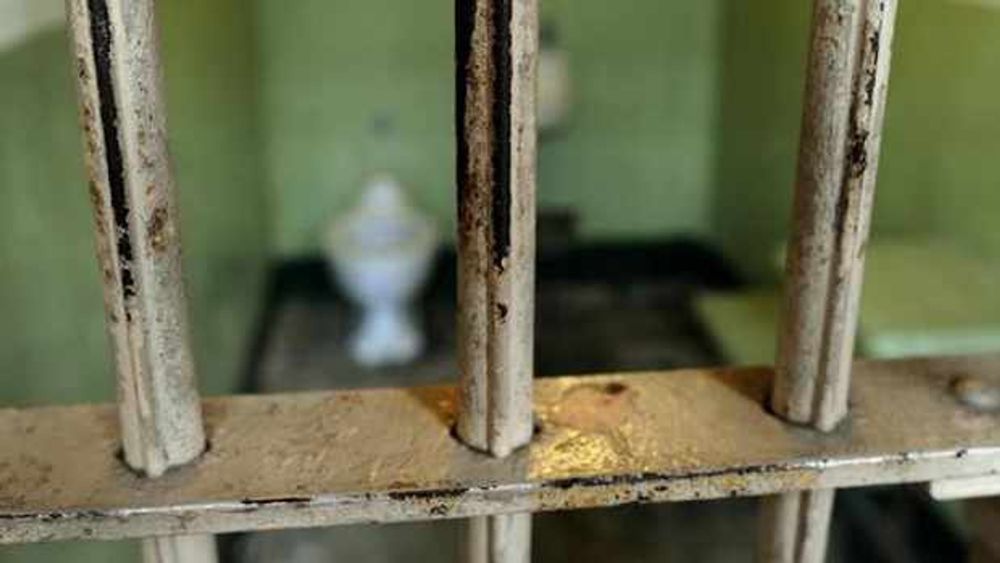
All three were found guilty of trying to overthrow the ANC government in the early 2000s. They were sentenced in 2013. Lets was sentenced to 30 years in prison for treason, which was suspended for a period of 10 years. His sons were sentenced to 35 years in prison for treason, suspended for a period of 10 years; five years for culpable homicide and eight years for conspiracy to assassinate ex-pres. to assassinate Nelson Mandela.
Wilhelm and Johan were part of a group of Boeremag members who, after their father’s arrest, planted bombs in Soweto, at the MC Mitchell Bridge at Port Edward and at a mosque. A bomb at the Nan Hua Buddhist temple in Bronkhorstspruit did not explode.
All three were released on parole in March 2022.
In its finding, the committee noted that the South African government had failed to make any substantive comments on the merits of the Pretorius family’s complaints.


Dr. Wilhelm Pretorius. (Photo: LinkedIn)
The government did ask early in the process that the committee should delete the Pretoriuses’ complaint because they have other local remedies at their disposal and have not yet exhausted them.
After this, the state did not provide any further input and the committee continued to make a finding “based on the undisputed testimony of the Pretorius family”.
The committee consequently found that there was an extraordinary delay in the trial which lasted more than 11 years. The committee pointed out that the state had failed to justify why the trial had to last so long.
Furthermore, it was found that the state had spied on the confidential communications between the accused and their legal teams. Evidence was accepted that audio and visual equipment was used in the courthouse and holding cells to eavesdrop on consultations.
Finally, it was also found that the government made it almost impossible for the three men to appeal against their convictions. The committee found that it was impossible for the men to meet appeal requirements because the state failed to make the records available and they did not have legal aid at that time.
The committee ordered the government to report within 180 days on steps taken following the findings made on the violations of the treaty. The decision must also be published and distributed, it was ordered.
The Department of Justice has not yet formally responded to the committee’s findings.
When asked on Thursday, Lets said the committee’s finding had been received and was being studied.
“We are not going to make any comments about it at this stage. Our legal team has also been given instructions not to talk about it with the media.”