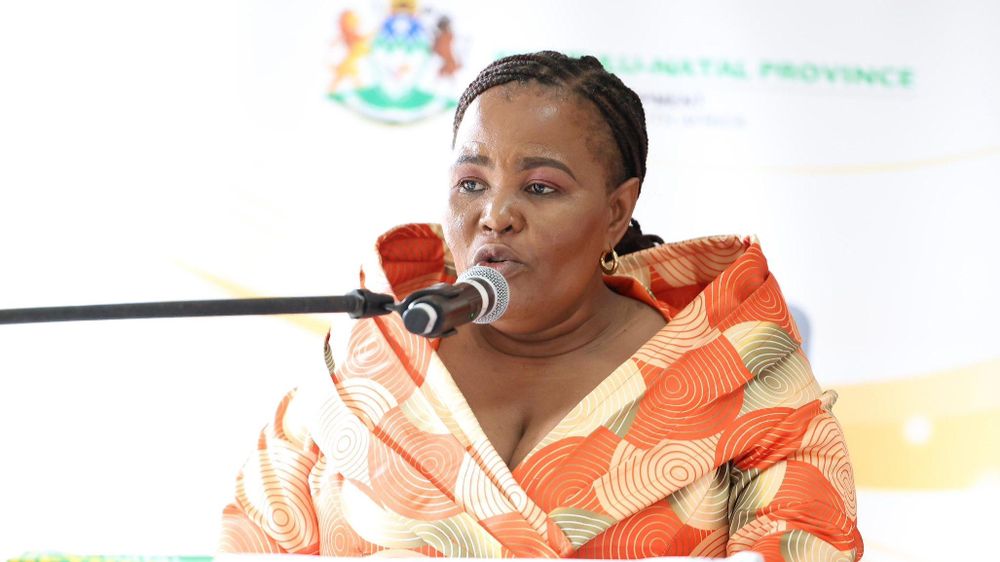







Agri SA, the Agricultural Chamber of Commerce of South Africa (Agbiz) and Infrastructure South Africa (ISA) signed a formal memorandum of cooperation at the Peritum Agricultural Institute in Bloemfontein on Saturday. (Photo: X/Dean Macpherson)
The Free State’s dilapidated road network, which has long been a thorn in the flesh of farmers and agricultural enterprises, will henceforth come under the magnifying glass thanks to a decisive strategic partnership.
Agri SA, the Agricultural Chamber of Commerce of South Africa (Agbiz) and Infrastructure South Africa (ISA) signed a formal memorandum of cooperation at the Peritum Agricultural Institute in Bloemfontein on Saturday.
This agreement is aimed at prioritizing important roads on agricultural routes in the province and thus systematically removing the logistical bottlenecks that hamper the industry.
The signing event was attended by Dean Macpherson, the Minister of Public Works and Infrastructure, as well as various partners in the industry. This step is considered an important milestone to align infrastructure planning with the real logistical needs of the agricultural economy.
Data-driven solutions for dilapidated roads
The partnership is launching a data-driven pilot project that aims to identify and prioritize provincial routes with a high economic impact. These routes are essential for the efficient transport of agricultural commodities from production areas to storage facilities, processing plants and final markets.
According to the parties involved, the current deterioration of key road networks has significantly driven up transport costs, reduced the efficiency of value chains and weakened the competitiveness of local agricultural production.
This collaboration is the fruit of sustained discussions between the Department of Public Works and Infrastructure, ISA, Agri SA and Agbiz. This ensures that the economic realities of productive sectors will help determine decisions about infrastructure investments going forward.
Johann Kotzé, CEO of Agri SA, and Theo Boshoff, CEO of Agbiz, have been appointed to the ministerial advisory panel for public asset management and infrastructure development. This panel serves as a platform where organized agriculture can provide technical and strategic input for infrastructure reform.


(Photo: Taylor Siebert/Unsplash)
Why the Free State as a pilot project?
The Free State was identified as a pilot province because of the province’s central role in national grain, livestock and agricultural processing production, as well as its strategic location in domestic and logistical export networks.
Through the memorandum, the partners will follow a structured process to jointly analyze the movement of agricultural products, production regions and logistics routes.
Kotzé welcomed the minister’s approach and says it is a sign of a new era in cooperation.
“The minister’s decision to engage directly with organized agriculture and listen to producers at the grassroots level sends a clear message that infrastructure reform must be anchored in economic realities.
“Sustainable agricultural growth depends not only on policy intentions, but on meaningful partnerships with those who understand the daily logistical pressures of moving food from farm to market,” said Kotzé.
This morning in Bloemfontein, we signed a historic MoU with the Free State Provincial Government, AgriSA and Agbiz to revitalise critical rural agricultural roads in support of farmers. ????????
Using real freight data and economic modelling, we will prioritise the road corridors… pic.twitter.com/qaFIDc3Yna
— Dean Macpherson MP (@DeanMacpherson) February 21, 2026
The economic impact of good roads
Reliable and well-maintained road infrastructure remains a key condition for growth in agriculture. This lowers the cost of inputs and products, improves access to markets, reduces post-harvest losses and strengthens the sector’s ability to compete locally and internationally. It also supports rural economic activities and contributes directly to food security in the country.
The partners agree that the memorandum emphasizes the value of coordinated public-private cooperation. Through joint planning and targeted investment, they want to unlock infrastructure delivery that responds to economic progress and can effectively support South Africa’s growth plan.
According to those involved, the ultimate goal is to develop a model which, if successful, can also be applied in other provinces – so that infrastructure planning across the country can be more targeted, efficient and economically informed.